Extracurricular :: For technologists who do their homework
##AUTHORSPLIT##<--->
In the next five years, expect to see Microsoft's new operating system, Windows Vista,explode in use in public schools. A decline is predicted for Windows XP, as well as aneventual phasing out of Windows 2000. Meanwhile, open source platforms may startgetting some traction in schools, where budgets are a primary concern.
Operating Systems: Growth and Decline
Growth From 2006 to 2011Compound Annual Growth Rate (CAGR)
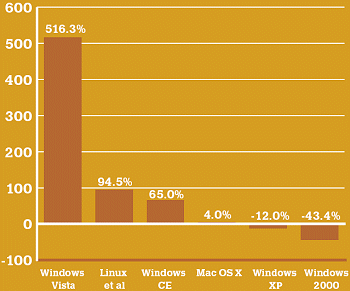
By 2011, Microsoft's Vista will clearly be the dominant operating system in schools, withmore than 5 million units, while use of XP and earlier Windows operating systems willtaper off. XP will have about 1 million units, while Windows 2000 will have less than20,000. Like XP, Mac OS X will have about 1 million units. An increase of about 300,000units is expected for open source platforms such as Linux, which indicates that schoolsare increasingly finding value in open technologies.
—Data courtesy of Jeanne Hayes (The Hayes Connection)and Tom Greaves (The Greaves Group).
Read about the full report, "America’s Digital Schools 2006: A Five-Year Forecast," at here.