Green Bay District Supports Chromebook Deployment with 4G LTE for Access on and off Campus
|
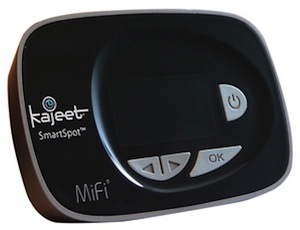
The SmartSpot mobile hotspot
|
Wisconsin's Green Bay Area Public School District is taking a novel approach to supporting its 1-to-1 Chromebook program. Rather than simply using standard WiFi, the district is providing broadband access via 4G LTE and allowing students to use the network on and off campus.
As part of a new pilot program, students in grades 6 to 12 will be able to take their school-issued Chromebooks (or netbooks) home on loan and access the Internet using SmartSpot access points from Kajeet that connect students to Sprint's 4G LTE network. Kajeet is a wireless service provider focused exclusively on kids and education. The SmartSpot is a mobile hotspot designed specifically for education that provides around-the-clock broadband access to students is coupled with Sentinel, a tool that allows schools to manage the SmartSpot devices and, if desired, filter content and limit sites that students can access.
The district purchased 3,000 Chromebooks for its 1-to-1 program.
"We're focused on developing technology-rich lessons as part of the district's curriculum goal, but we feel supporting the students' efforts at home is important in today's competitive world," said Diane Doersch, chief technology & information officer of Green Bay Area PSD, in a prepared statement. "Using digital learning, students can collaborate together on documents and communicate with their teachers in and out of the classroom. This gives teachers an opportunity to enhance their lessons and not hold back on assignments because some students may not have Internet access at home."
"The combination of a portable device such as a Chromebook and the Kajeet SmartSpot reduces the IT burden on a school," said Daniel Neal, CEO and founder of Kajeet, also in a prepared statement. "With cloud-based content and affordable mobile access, students can access content with more reliability and reduce IT management needs from school staff."
Green Bay Area PSD serves about 22,000 students and employs 3,300 staff. It operates 28 elementary schools, six middle schools, four high schools and one charter school, as well as preschool program and a fine arts institute.