Partnership Continues to Support Girls in Computer Science

Dell is extending its partnership with Girls Who Code (GWC), a national nonprofit organization that works to close the gender gap in technology, in an effort to improve and expand school programs that teach computer science.

The partners plan to reach 15,000 girls across the country with new investments offering financial, technical and mentorship support for GWC’s Clubs Program, or after-school programs for girls in grades 6–12. Programs will be concentrated in schools across the Great Plains and Rockies, the Southeast, the Northeast and San Francisco, according to a prepared statement.

The investments include:

  • A $40,000 cash donation from Dell;
  • A team of five women technology leaders who will serve as program ambassadors to organize and oversee mentorship services; and
  • Materials and supplies for STEM curriculum.
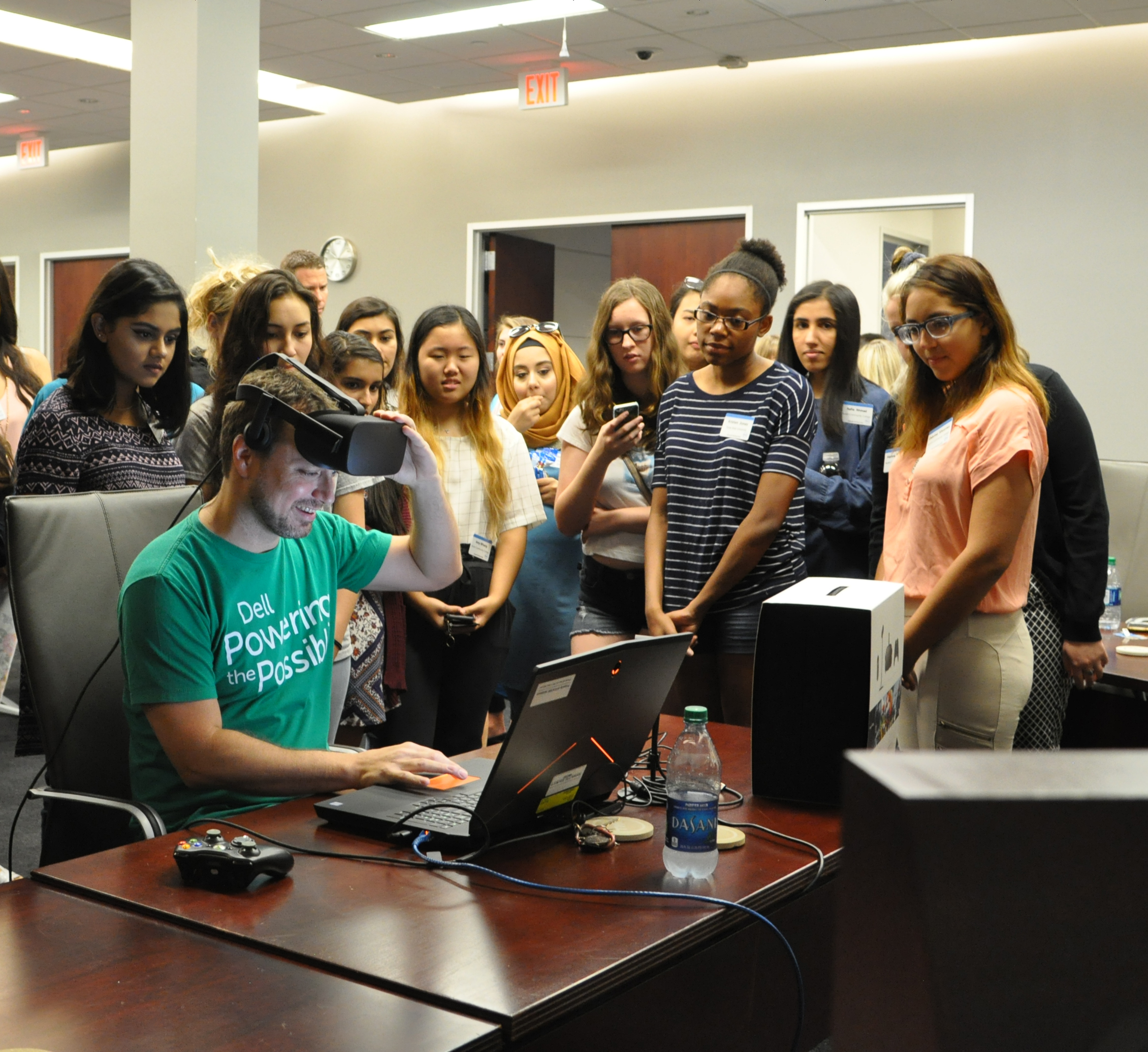
A group of girls in the GWC Summer Immersion Program learn about virtual reality at Dell's campus.

Dell previously worked with GWC on a few other similar programs. In fact, this past summer, GWC brought more than 30 girls to Dell’s Round Rock campus to gain exposure to tech jobs through its Summer Immersion Program.

“It’s the incredible support by partners like Dell that have enabled Girls to Code to become the largest computer science program for girls in the United States,” said Reshma Saujani, founder and CEO of GWC, in a statement.

To learn more about the program, visit the Girls Who Code site.

About the Author

Sri Ravipati is Web producer for THE Journal and Campus Technology. She can be reached at [email protected].

Featured

  • Man offers stem word sign on virtual screen

    Immersive Workforce Development Initiative Connects Students with Real-World STEM Careers

    The Center of Science and Industry, a science museum and research center in Central Ohio, has launched The HIVE, a workforce development initiative designed to help students across the country explore real-world career pathways in aerospace, advanced manufacturing, engineering, and emerging technologies.

  • digital lock

    CoSN: Cybersecurity and Data Privacy Remain Top AI Concerns in Education

    A leading concern for education technology leaders across the United States is the potential for AI to enable new forms of cyber attacks, according to the latest State of Ed Tech report from CoSN.

  • broken digital lock and glowing chain

    Check Point Researchers: AI Has Crossed into the Live Attack Chain

    AI is moving beyond assisting cybercriminals and beginning to operate within live attacks, according to a recent report from Check Point Research. The technology is making sophisticated capabilities faster and more accessible while creating new security risks for businesses deploying their own AI systems.

  • circuit patterns

    Anthropic Intros Lower-Cost Claude Sonnet 5

    Anthropic has launched Claude Sonnet 5, positioning the model as its most autonomous mid-tier offering to date and a lower-cost alternative to its flagship Opus 4.8 system. The company said the model can plan multi-step tasks, operate tools such as browsers and terminals, and complete agentic work at a level that previously required larger and more expensive models.