Moodle Goes Mobile on iPhone
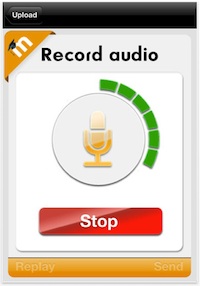
My Moodle lets users record multimedia on their iPhones and upload it to their Moodle sites. |
The open source learning management system Moodle has a new mobile companion. Developers at Moodle HQ have released a free app for iOS designed to work with Moodle 2.1 or later. Apps for additional mobile platforms are planned.
The mobile app, My Moodle, provides access to the Web-based Moodle and also adds several features specific to the mobile version, like the ability to capture audio on the user's iPhone and upload it to the full Moodle site.
Moodle is a widely adopted open source learning management system that supports both small and large deployments (with several sites well beyond 100,000 users) and includes course management tools, various Web 2.0 technologies, online assessments, integration with plagiarism detection tools, integration with repositories and electronic portfolio software, and other features common to learning management systems. It's used by about 1.1 million teachers and more than 45 million users via 55,000 sites worldwide. Those users participate in some 4.9 million total courses as of this writing. (Current statistics can be found on Moodle's project site.)
As Moodle's developers described it, My Moodle isn't a replacement for the Moodle interface; rather, it just provides some additional tools tailored specifically for mobile users. These include the ability to:
- Capture video, still images, and audio and upload those to Moodle;
- Upload images and video from users' existing libraries;
- E-mail and message participants in users' courses;
- Add notes about users;
- Add course participants to users' iPhone contact lists;
- Get help through MoodleDocs; and
- Access the full Moodle site. (A separate login for the Web version is required with the version of the mobile app.)
My Moodle 1.0.1 is available as a free download from the iTunes App Store. It requires Moodle 2.1 or later with mobile Web services enabled. Moodle is currently seeking developers to create a mobile app for Android. A Moodle for Mobile forum has also been launched.