President Unveils New Initiatives During National Week of Making
Maker Promise involves more than 1,400 schools, almost 1 million students and all 50 of the United States.
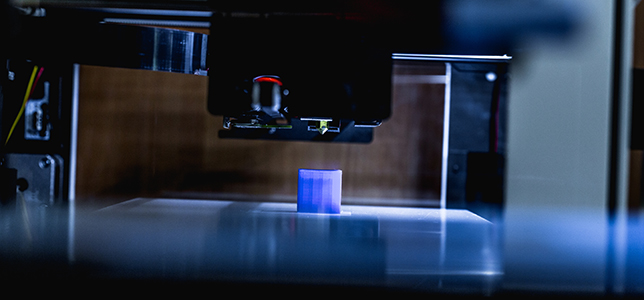
President Obama has proclaimed this week a National Week of Making, unveiling a number of new initiatives, including a project involving more than 1,400 schools, almost 1 million students and all 50 of the United States.
Maker Promise is a pledge by a K-12 school leader to support the students in his or her school or district by taking three concrete steps: dedicating a space for making; designating a campaign for making; and hosting a public showcase of student projects. Maker Promise is a collaboration with Digital Promise, a bicoastal nonprofit, and Maker Ed, an Oakland-based nonprofit.
With support from Chevron and Google, Digital Promise and Maker Ed are also launching a national network of Maker Promise schools with professional development guides, safety kits, storytelling tools and other resources.
A program called the CTE MakeOver Challenge, co-sponsored by the Department of Education’s Career and Technical Education division, is also part of the Maker Promise initiative. It launched earlier this year and has received entries from more than 600 schools. A few example projects include:
-
Baltimore County Public Schools in Baltimore County, MD, will launch a Mobile Innovation Lab to support access for maker learning opportunities to over 110,000 students in 175 schools and programs district wide.
-
Fox Chapel Area School District in Pittsburgh, PA, will integrate making into its computer science curriculum for more than 2,000 elementary school students, including the student-created and facilitated program, Code to Create.
-
Vancouver Public Schools in Vancouver, WA, has pledged to implement Learning Studio, with support from HP, Microsoft and Digital Promise Global, to make digital design tools available in support of monthly student design challenges and sharing student projects online.
“During National Week of Making, we recommit to sparking the creative confidence of all Americans and to giving them the skills, mentors and resources they need to harness their passion and tackle some of our planet’s greatest challenges,” President Obama said in a prepared statement. The National Week of Making officially started June 17 and continues through June 23.
In addition to the MakeOver Challenge and Maker Promise commitments by schools and districts, many other communities, companies and organizations are taking steps to create and repurpose existing spaces.
-
4.0 Schools — a private organization that describes itself as a “nonprofit early-stage education incubator,” with a focus on reform and innovation — will equip up to 100 aspiring founders to launch pop-up versions of learning spaces, from “makerspaces” to recreation centers to coding labs. Up to 30 of these founders will be equipped with coaching, $10,000 in capital and community support to grow these pop-ups into 10 student pilot programs in the next year.
-
The city of Pittsburgh, the Sprout Fund and organizations from the Remake Learning Network will work together to reimagine Pittsburgh’s recreation centers as accessible neighborhood-based places for technology-enhanced learning. By May 2017, this partnership will yield a community plan, site-specific curriculum, renderings and space designs and a demonstration effort.
-
Fab Foundation will support the opening of 12 new fab labs over the next year, reaching 20 more communities across the U.S. and introducing about 20,000 individuals to making and digital fabrication over the next year.
-
Google is partnering with MakerEd and the Children’s Museum of Pittsburgh to award $1 million over the next two years to schools, libraries, nonprofits and recreation and community centers to build more than 100 new “makerspaces” as part of a new Making Spaces program.
-
The Teaching Institute for Excellence in STEM will partner with Toyota and Cal State University, Dominguez Hills to bring four mobile and digital fabrication labs to K-12 schools in the Los Angeles region, reaching 2,000 teachers and 12,000 students over the next five years.
Many other initiatives are in the works. For details, visit the White House website or the White House Press Office.
About the Author
Richard Chang is associate editor of THE Journal. He can be reached at [email protected].