Houston Nonprofit Delivers Refurbished Computers, Tech Education to Underserved Youth
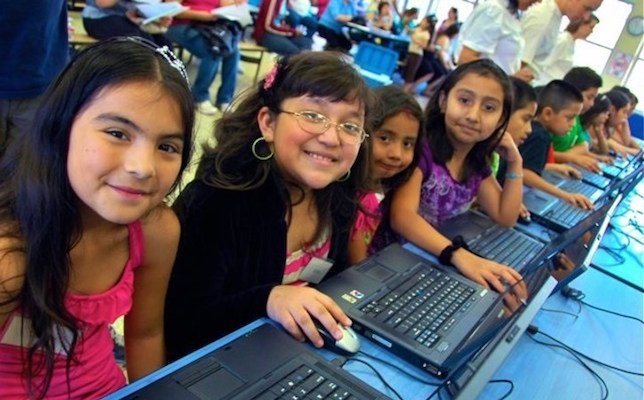
Image Courtesy of Comp-U-Dot.
In the greater Houston area, an estimated 133,000 families do not have a computer at home. To help bridge the digital divide, the nonprofit Comp-U-Dopt has delivered more than 8,600 refurbished computers to Houston students from underserved communities.
Comp-U-Dot celebrates 10 years of providing technology access and education training. Its Computer Adoption Program, for instance, involves taking in lightly used, donated corporate computers; converting them to a Linux operating system; loading freeware education programs; and distributing the devices to applicants who demonstrate a need for a computer.
The nonprofit has also logged away more than 143,000 hours of technology training — reaching upwards of 9,000 students in grades 3 through 8 and 300 high school students since it was founded in 2007. Learn to Earn, as an example, gives high school students a chance to earn a laptop by completing a day of technical training. Students in the program start by learning the basics of hardware engineering (i.e. how to build a computer) and then move into programming concepts, learning to code a calculator in JAVA and translating it to HTML. There are training programs for video game design and STEAM as well.
Art Huffman, chairman of the board of directors for Comp-U-Dopt and former chief information officer of Halliburton, commented in statement that the opportunities for careers in STEM are tremendous. "At Comp-U-Dopt, we're helping make a difference by taking used computers, refurbishing them and getting them in the hands of children who don't have access to a computer at home. And we don't stop there – every year we're building on technical education programs that have provided thousands of students in grades 3-12 with technical literacy and computing skills."
To learn more about the organization's initiatives, visit the Comp-U-Dot site.
About the Author
Sri Ravipati is Web producer for THE Journal and Campus Technology. She can be reached at [email protected].