Report: Girls Outpace Boys in Technology Literacy
A new report from the National Center for Educational Statistics digs into the trends in technology and engineering literacy for eighth graders over a four-year period.
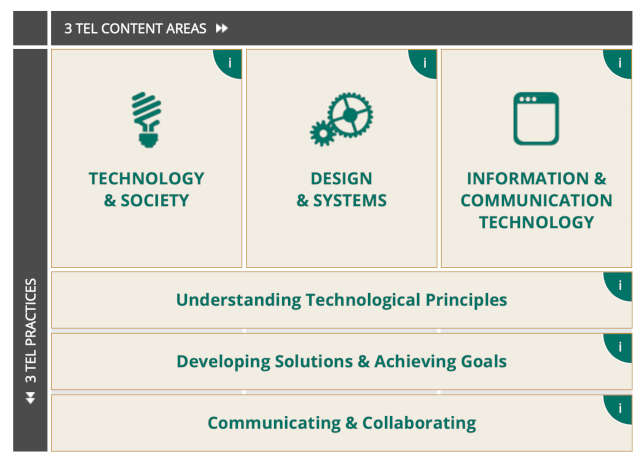
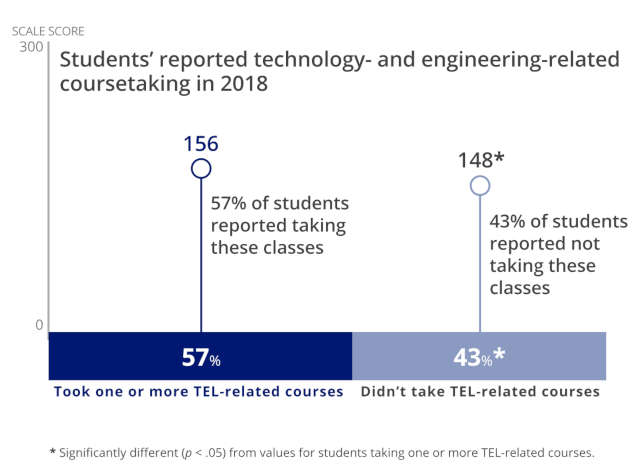
More eighth grade students are taking technology or engineering courses in school, which has increased the number of students who are proficient in technology and engineering literacy. These results are part of a 2018 National Assessment of Educational Progress (NAEP) in Technology and Engineering Literacy (TEL) assessment that tests eighth grade students on their ability to solve problems or achieve goals based on their understandings of the use and effects of technology and engineering in daily life. Approximately 15,400 eighth graders from 600 public and private schools took the TEL assessment in 2018.
Eighth-grade students showed an average increase on the TEL assessment by 2 points compared to 2014 scores. Almost half of students were at or above NAEP Proficient level at 46 percent, compared to 43 percent in 2015.
“This assessment is important because it asks students to demonstrate skills that are crucial for success in our rapidly changing world,” said Beverly Purdue, chair of the National Assessment Governing Board. “Along with NAEP Science and Mathematics assessments, TEL provides educators and policymakers a comprehensive picture of achievement in science, technology, engineering, and mathematics, which is so vital to our nation’s future.”
When it comes to the TEL assessment, it evaluates students in three practice areas: understanding technological principles, developing solutions and achieving goals, and communicating and collaborating. Scores increased by at least 2 points in all practice areas in 2018.
Girls scored higher than boys across all three practice areas, but the TEL findings showed that girls take less technology and engineering classes in school compared to boys.
More information about the TEL assessment can be found here.
About the Author
 Sara Friedman is a reporter/producer for Campus Technology, THE Journal and STEAM Universe covering education policy and a wide range of other public-sector IT topics.
Friedman is a graduate of Ithaca College, where she studied journalism, politics and international communications.
Friedman can be contacted at [email protected] or follow her on Twitter @SaraEFriedman.
Click here for previous articles by Friedman.