Minecraft Rube Goldberg Contest Open Now
- By Dian Schaffhauser
- 10/06/20
Students
in grades 3-12 have the opportunity to participate in a new
competition that encourages them to use Minecraft to come up with
complicated machinery that accomplishes very little. The North
America Scholastic Esports Federation
is hosting the first NASEF
2021 Digital Rube Goldberg Machine Minecraft Contest.
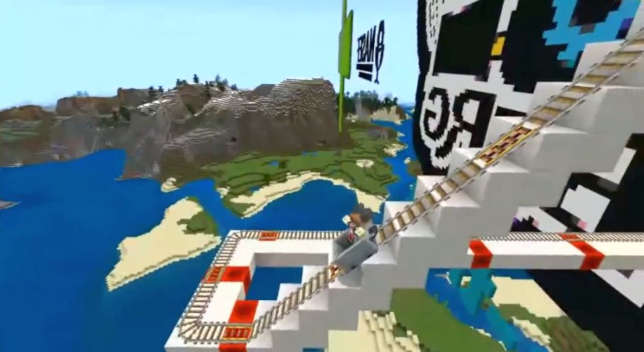
Throughout this fall, teams of students will compete by imagining,
designing and building machines using the block-oriented game; then,
during the second half of the academic year in 2021, there will be a
finals challenge when students will string together a series of
designs to create a zany chain-reaction Rube Goldberg Machine.
Rube
Goldberg, who died in 1970, was a Pulitzer-Prize-winning cartoonist
known for his comical chain reaction "invention cartoons."
(For an entertaining example, check
this YouTube video.)
The contest is being supported by Rube
Goldberg, Inc.,
a nonprofit whose focus is on STEM and STEAM activities.
NASEF,
a nonprofit that encourages esports for education in K-12, is
providing free registration to enable as many students as possible to
participate. It's also offering free use of Minecraft
Education Edition
(for PCs and Chromebooks). Currently, the organization is holding
livestreams on twitch.tv
for teachers and students, to detail the various "mini-challenges."
Those are being recorded and made available on demand. The concepts
of the incline plane and pulley have already been covered and are
available on
the contest web page.
Upcoming
sessions will cover:
NASEF
will also provide free coaching through its partners at Connected
Camps, particularly helpful for teams that are new to Minecraft.
Teams
will have 10 days to design and complete each Minecraft creation and
submit a Flipgrid
video describing their machine and its construction. The finals
challenge, which will combine all the various elements, will run from
Jan. 5 through Mar. 15, 2021. The type of machine to be built will be
announced on Jan. 5.
Winners
of the mini-challenges during the tutorials will be selected by
raffle and receive a variety of prizes, including Rube swag. Winning
teams in each division of the finals will win a team trophy and a
$250 award plus a matching amount for a favorite charity as well as
Rube Goldberg and NASEF stuff.
"Educators
are always searching for ways to engage kids with fun programs that
teach engineering and technology principles along with creativity;
this year they also need to be equally available at home or in a
classroom," said Tom Turner, chief education officer at NASEF,
in a press release. "This exciting Minecraft competition
provides a place for kids to work in teams, have fun making
inventions, develop important STEAM skills--and win prizes!"
"We
are so excited to partner with NASEF and Minecraft to create the
first digital Rube Goldberg Machine Contest," added Jennifer
George, the legacy director of Rube Goldberg, Inc. "This
opportunity will bring the contest to even more students, as they use
their computers to design equally creative contraptions. We can't
wait to see what students come up with!"
Participation
begins with registration on
the NASEF website.
About the Author
Dian Schaffhauser is a former senior contributing editor for 1105 Media's education publications THE Journal, Campus Technology and Spaces4Learning.