PowerSchool Releases AI-Powered Tools for Students, Admins
PowerSchool recently announced the general availability of two new AI-powered education tools, one for students and one for education data managers.
The new PowerBuddy for Learning tool is the student-facing equivalent of the already-released PowerBuddy for Learning teacher assistant. A module within the broader PowerSchool Schoology Learning Management platform, PowerBuddy for Learning is natural-language AI chatbot that students can use to help them with homework, projects, and lesson reviews.
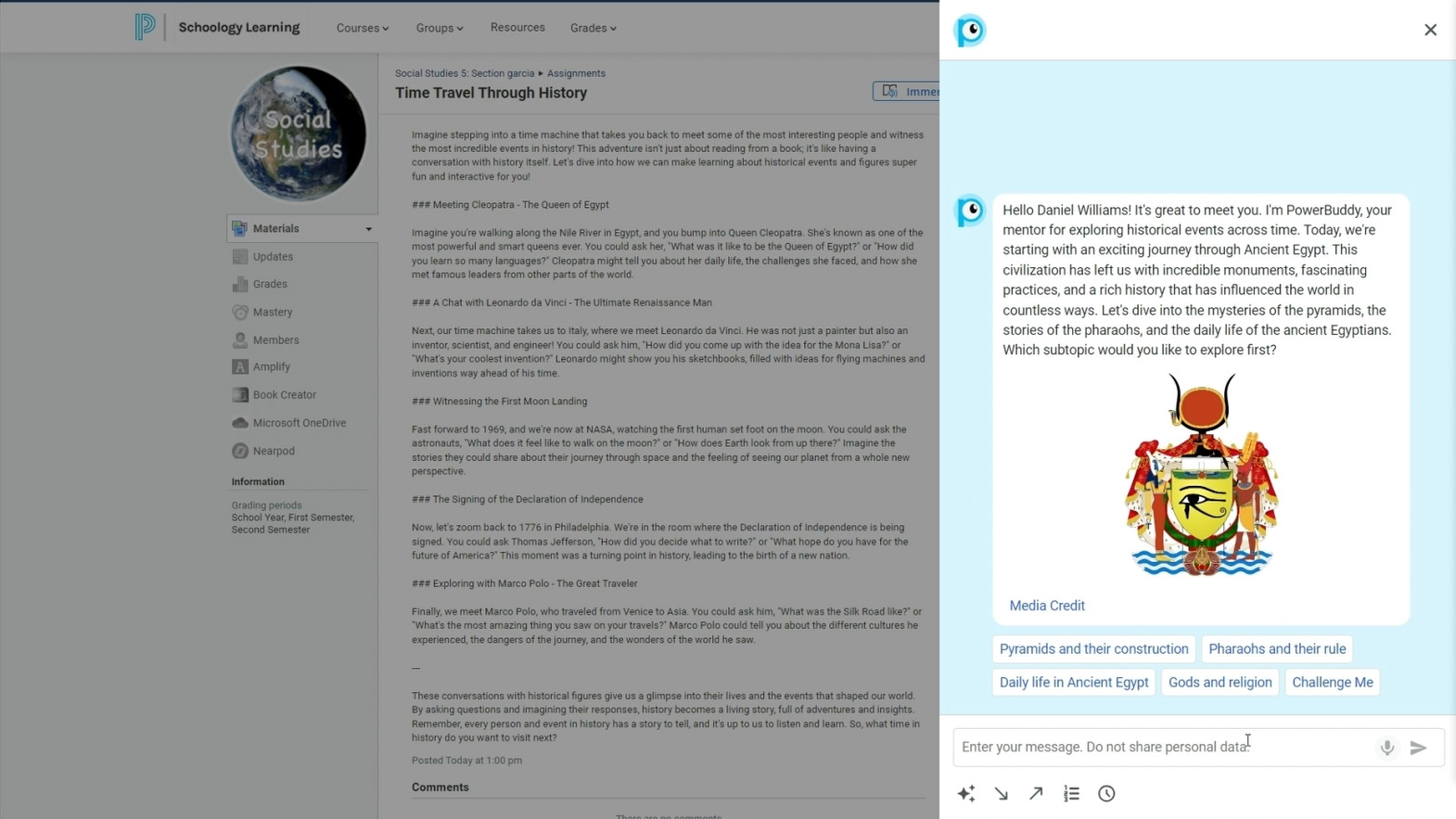
PowerBuddy for Learning
Its integration with Schoology means PowerBuddy for Learning has automatic awareness of each students' assignments, as well as their grade level, reading capabilities, and learning styles. It can therefore provide students with tailored, age-appropriate, and contextualized responses that are in line with their district's standards.
PowerBuddy for Learning also goes beyond simply answering students' questions; it "encourage[s] students to explore topics" in greater depth, according to PowerSchool. And it uses the Socratic method to steer students toward the correct answers, encouraging critical thinking.
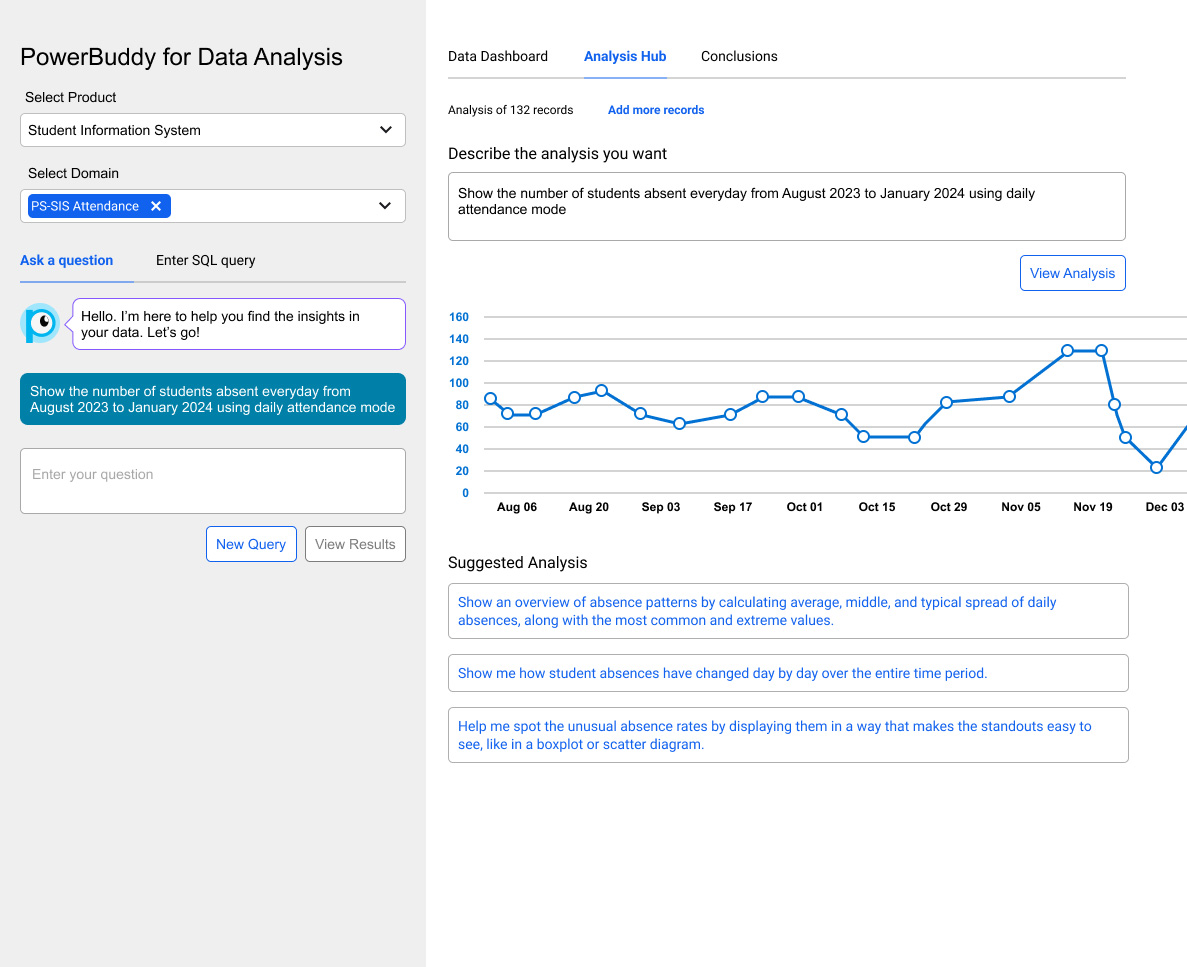
PowerBuddy for Data Analysis
The other new tool, also generally available, is admin-facing. PowerBuddy for Data Analysis is a natural-language AI assistant to help users surface, synthesize, and visualize data about everything from absentee rates to staffing levels. It's designed to quickly find data and organize it into useful visualizations, even for users who have limited experience with databases, data processing, or coding
PowerBuddy for Data Analysis "streamlines operations and significantly reduces workload for technical teams by transforming the influx of ad-hoc data requests into intuitive visual narratives through natural language interaction," said PowerSchool.
More information on both products is available here.