Data Quality Campaign Releases Policy Brief on Student Data Collection
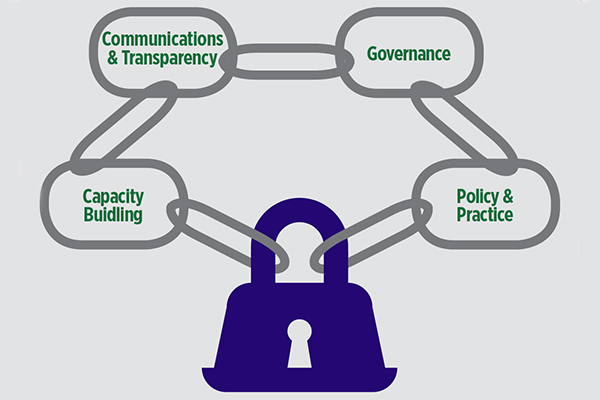 Amid growing concern over the privacy of students’ data, the Data Quality Campaign has released a new policy brief designed to clear up misconceptions and offer guidance to educational leaders. Student Data Collection, Access, and Storage: Separating Fact from Fiction points out several key facts about the collection and sharing of student information, including the following:
- Employers and the media cannot, by law, access an individual student record.
- States collect from districts a small subset of student information to evaluate and improve student learning.
- The U.S. Department of Education is prohibited by law from creating a federal database that includes students’ personally identifiable information.
- States have policies regarding how long data can be stored and when it must be destroyed.
The brief also offers the following policy suggestions for educational leaders:
- Establish governance by clarifying who is responsible for managing data across agencies and over time.
- Identify where state policy can supplement federal law. For example, establish, implement, and monitor data destruction policies and create consequences for violating such policies.
- Create robust requirements, model language, and transparency for third-party service provider contracts.
- Help parents understand how linking student data over time improves their child’s college and career readiness.
Aimee Rogstad Guidera, founder and executive director of the Data Quality Campaign, commented, “The goal of effective education data use is to improve student success, but we can’t reach this goal without assurance that students and their data are safe. Policymakers need to take responsibility and action by building an environment of trust and a culture of ethical data use.”
About the Author
Christopher Piehler is the former editor-in-chief of THE Journal.