Coweta County School System in Georgia Piloting Labdisc Portable STEM Lab
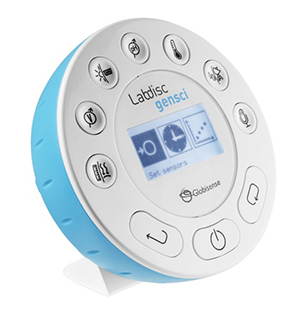
The Coweta County School System in Georgia is piloting the Labdisc portable STEM lab from Boxlight, as part of efforts to prepare for Georgia’s new science standards and usher in a hands-on, inquiry-based approach to its classrooms.
A group of science teachers, selected by the district to serve as “science ambassadors,” are evaluating the Labdiscs to see how the data loggers can be incorporated into the new standards-related district lesson plans that the ambassadors are developing.
“The new standards focus on student performance in science so there’ll be a lot of emphasis on students’ generating data to use as evidence to support the hypotheses that they are making,” said Donald White, the district’s science content specialist, in a statement. “So we’re moving away from a worksheet-driven classroom to one where we’re expecting the students to really do science.”
The district has procured seven Labdiscs, purchasing two and five from its vendor, PowerUp EDU, a Georgia-based company offering professional development and ed tech solutions. Three Coweta County high schools, two middle schools and two elementary schools are each piloting a Labdisc. The Labdisc retails at $600 apiece.
White also tapped Regina Ahmann, a zoology and AP environmental science teacher at East Coweta High School, to receive a free Labdisc as part of Boxlight STEM Day Dec. 9. Ahmann’s students used the portable STEM lab to study the relationship between temperature and humidity in several locations around their school, in both urban and green spaces. The students will share their data Feb. 15 with other schools that participated in the event from New Mexico, Arizona, Mexico and Guatemala.
“What I loved about this product is that it’s collecting data every second,” Ahmann said in a statement. “There’s no possible way my kids could have done that with a thermometer…. You can get your big core concept across to students in a real-world framework.”
Mark Elliott, CEO of Boxlight, said in a statement, “The Labdisc portable lab opens the door to inquiry-based learning in a variety of science fields, including biology, chemistry, physics, environmental science and geography.”
For more information, visit Boxlight’s website.
About the Author
Richard Chang is associate editor of THE Journal. He can be reached at [email protected].