Raspberry Pi Foundation and CoderDojo Merge
- By Dian Schaffhauser
- 06/12/17
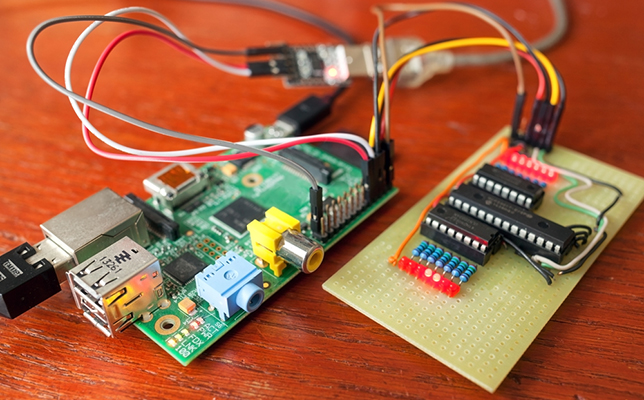
Tabletop experiment with Raspberry Pi and home-brewed circuit with some of the LEDs on. Image courtesy of Shutterstock.
Two nonprofits in the education business have joined forces. The Raspberry Pi Foundation has merged with CoderDojo.
The first foundation is a United Kingdom-based organization that produces credit card-sized devices for use in creating low-cost computers. Ten million of its devices have been sold worldwide. Recently, the foundation introduced a new version of its Raspberry Pi Zero W, an even smaller version that costs only $10 (compared to $35 for the flagship Raspberry Pi) and includes WiFi and Bluetooth capabilities.
CoderDojo supports a global network of free programming clubs ("dojos") for young people 7 to 17. At the volunteer-run clubs, the "ninjas" learn how to build websites, create apps and games and explore technology in an informal and social environment.
The goal of the merger, according to a press release issued by the two organizations, is to "give many more young people the opportunity to learn how to code and create." Together, they hope to expand the number of dojos around the world from 1,250 to 5,000 by the end of 2020.
CoderDojo has assured its 9,000 "mentors" or volunteers that the organization will remain independent and that its work will remain hardware- and software-neutral. Its headquarters will remain in Ireland, where the organization was founded.
The Raspberry Pi Foundation will also provide practical, financial and back-office support to the CoderDojo Foundation and become a corporate member of the other foundation (akin to becoming a shareholder but without money involved). CEO Philip Colligan will also become a director at CoderDojo. And CoderDojo co-founders, Bill Liao and James Whelton, will become members of the Raspberry Pi Foundation.
"In practical terms," CoderDojo wrote on its blog, "this merger will see our two organisations working closely together to advance our shared goals. It will enable us to leverage assets and capabilities ultimately driving further value for the CoderDojo community."
About the Author
Dian Schaffhauser is a former senior contributing editor for 1105 Media's education publications THE Journal, Campus Technology and Spaces4Learning.