How Augmented Reality Engages ELLs
A kindergarten teacher pairs his research-based curriculum with 3D animals to teach and delight his kindergartners.
- By Greg Smedley-Warren
- 01/25/18
I teach at a Title 1 school and have 21 students in my kindergarten classroom. My students speak six different languages, and 95 percent of them are English language learners (ELLs). My approach to teaching is "relationships first." I teach students, not curriculum, and I believe in creating high-quality lessons and curriculum and delivering that material in a FUN and engaging way! I have high expectations for my students and encourage risk-taking, exploration and fun!
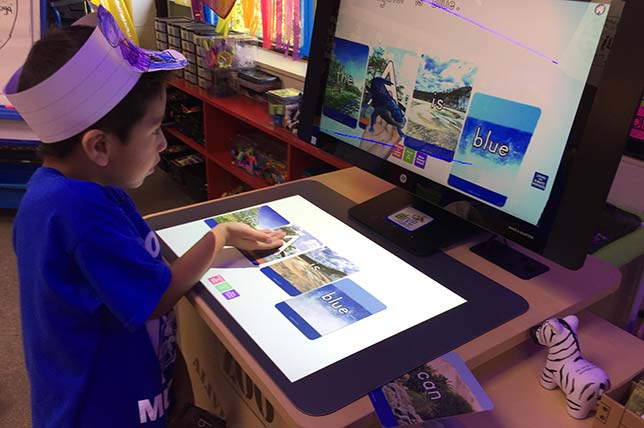
When it comes to technology, the kids use iPads, laptops and Kindle Fires, as well as our Smart Board. For about two years now, we have used the augmented reality platforms, Letters alive and Math alive, and they have been a huge success in our classroom. A couple of months ago, we took things to the next level and started using the Sprout Pro G2 Learning alive Station. The station combines the 3D augmented reality cards of Letters alive and Math alive with the Sprout's built-in high-res document camera and 20-point Touch Mat to give my students a highly interactive, cross-curricular 3D experience.
Implementation of the Sprout was seamless. With just the touch of two buttons, I was up and running. There are no cables to connect, and everything is contained in one piece of equipment. This eliminates a lot of the tech issues for the kids and teachers and means they can use it on their own. I love that the mat is like a second screen. The activities and interactive buttons project onto the mat in vivid color for kids to touch and explore! And makes the Sprout experience more like a touchscreen tablet that our students are so familiar with! This, along with the manipulative flash card sets, help with learning letters and letter sounds as well as word and sentence building; not to mention the math skills.
One of our favorite things to do is build words with Letters alive. I'll say a word and students find the letter cards and spell the word. Then they push the button to hear the sounds and the word. This provides them with scaffolded practice with phoneme segmentation and blending their sounds into words. Once the students are familiar with this activity, it actually becomes an independent learning center that my students do on their own. They use picture cards and build the words on the card using Letters alive, and then write the word. This gives them a multi-modality approach to word work! For our classroom, this ability for students to use the technology is vital because it's their classroom and their technology and their learning, and I want my students to have access to everything in their classroom!
A Research-Based Literacy Bootcamp
We first introduce Letters alive to each class during our 26-day ABC BOOTCAMP at the beginning of the year. ABC BOOTCAMP is our research-based curriculum for learning letters and sounds. We use the Letters alive animal cards to introduce the letter and sound before the class creates a circle chart for the letter of the day. The 3D augmented reality animal associated with the letter of the day really gets the students excited. Learning about the animal while learning the letter ties in science and connects this system to our STEM initiatives.
With Math alive, we use the interactive games to bring our greater than/less than lessons alive with Amos Alligator. The students predict which number or group will be bigger, then they move the symbol and we see which number Amos eats. This game on Math alive makes the students so enthusiastic and truly brings this skill to life for all types of learners!
One of the benefits I see to using augmented reality with my kindergärtners is that it brings abstract skills and concepts to life in a concrete way. This shift from abstract to concrete makes the skill and learning more accessible to our students.
The results are clear, too. At the end of ABC BOOTCAMP we have an average of 90% mastery of all letters and sounds. When using Learning alive as a supplement to our ABC BOOTCAMP curriculum, we've seen literacy scores improve—and the laughter and squeals of excitement are sure signs of the learning and engagement happening!
Our next project with the Sprout will be integrating it into our learning centers time so the students can use it 100 percent independently as a center choice. They will be able to set up their own augmented reality station and connect with their favorite animals, all the while working on word building, sight words, letter sounds and sentences.