How Educators Utilize Research
Preliminary findings from a survey of educators shows teachers are most interested in following trends in technology and trauma and mental health.
A recent survey of teachers shows 17 percent of educators are interested in learning the most about technology trends, according to preliminary findings from the Jefferson Education Exchange. Fifteen percent of educators expressed an interest in following trends in trauma and mental health, and 10 percent are interested in equity trends. In addition, 8 percent of educators want to learn about trends in educator talent.
"[Educators] identified both big themes and smaller ideas within those big themes that they want to see research on. We have that research … and we need to figure out how to communicate this information out because they are craving this information to help them out in their classrooms," said Emily Barton, JEX's director of implementation research at a Nov. 27 conference from JEX and the U.S. Department of Education's Institute of Education Sciences.
The survey collected findings of 510 K-12 educators including teachers, administrators and coaches as of Nov. 19. The results are just preliminary findings, and not all numbers add up to 100 percent of respondents. A final survey report is expected in early January.
Some of the other issues that interested educators include the use of social media, research on underrepresented groups such as non-white and free and reduced lunch, 21st century schools and teacher burnout rate and retention.
The survey also found that 85 percent of educators believe research to be useful and that 74 percent consider research relevant. It also measured how much research teachers have accessed over the past year. The results showed the plurality of educators (37 percent) access 11 to 20 pieces of research a year.
However, the survey results also showed that 42 percent of educators don't believe that research is easy to find and easy to understand. Forty-five percent of educators don't think that the research accessed is easy to transfer into practice.
"From our conversations with educators, it seems like they don't have the time to engage deeply, and they need translated and digested research," Barton said. "Educators are capable of understanding the research. It's just the time constraints."
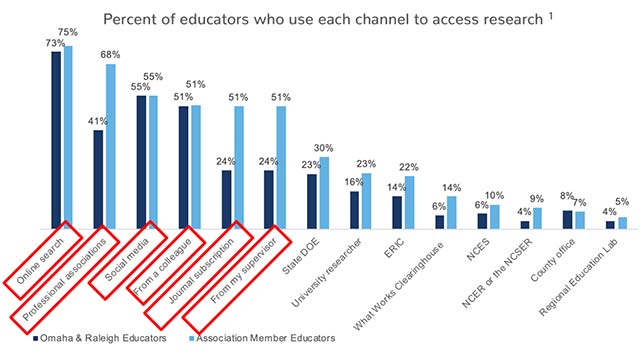
When it comes to finding research, 75 percent of respondents found research from online searches, and 68 percent of educators got research from their professional associations. Fifty-five percent of educators found research through social media.
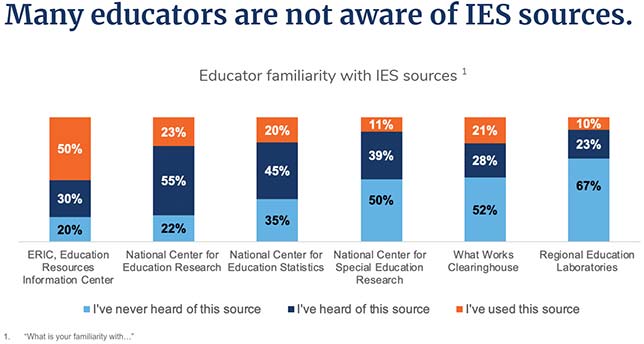
When it comes to resources from the U.S. Department of Education, the majority (55 percent) had heard of resources from the National Center for Education Research, but only 22 percent have used the research.
More information about the Jefferson Education Exchange can be found here.
About the Author
 Sara Friedman is a reporter/producer for Campus Technology, THE Journal and STEAM Universe covering education policy and a wide range of other public-sector IT topics.
Friedman is a graduate of Ithaca College, where she studied journalism, politics and international communications.
Friedman can be contacted at [email protected] or follow her on Twitter @SaraEFriedman.
Click here for previous articles by Friedman.