High School Team Masters 3D Printing for Part in $2.2B Aircraft
- By Dian Schaffhauser
- 02/25/19
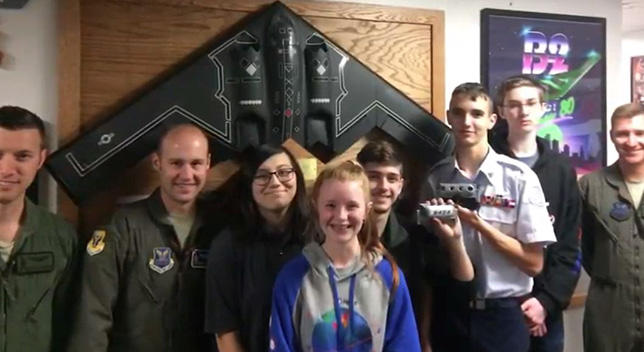
A high school team in Missouri recently helped the U.S. Air Force create 3D-printed switch covers for a $2.2 billion aircraft. Students from Knob Noster High School, which serves families deployed and working at nearby Whiteman Air Force Base, designed the plastic cover for a switch box inside the B-2 Spirit bomber.
According to base spokesman Capt. Kennan Kunst, the B-2 Spirit cockpit, while equipped with "state-of-the-art, cutting-edge technology," is also "very cramped." Something was needed, he said, "to keep the pilots or other items from bumping into the switches."
The Air Force reached out after one of the B-2s made an emergency landing in Colorado Springs, because, among other problems, a switch was flipped that shouldn't have been.
The four-switch cover is part of the airframe mounted accessory drive, which is situated next to the left knee of the person in the cockpit, according to a video about the project.
Brig. Gen. John Nichols, the 509th Bomb Wing commander, took the project to Superintendent Jerrod Wheeler, who approached the high school's robotics team. Said one student in the video, "It's not very often that a superintendent comes into your school, into your classroom and says, 'We need a favor from this class and this robotics team.'"
According to Nichols, within 72 hours of finishing the initial design concept, "This team of high school, STEM-related, super-smart students printed this. Seventy-two hours from the initial design time to the final product."
Now the cover is used in all operational B-2s at Whiteman, as well as the aircraft's training simulators. Each one costs $1.25 to produce.
About the Author
Dian Schaffhauser is a former senior contributing editor for 1105 Media's education publications THE Journal, Campus Technology and Spaces4Learning.