Friendly Robot Helps Autistic Kids Practice Social Skills
- By Dian Schaffhauser
- 04/04/19
A
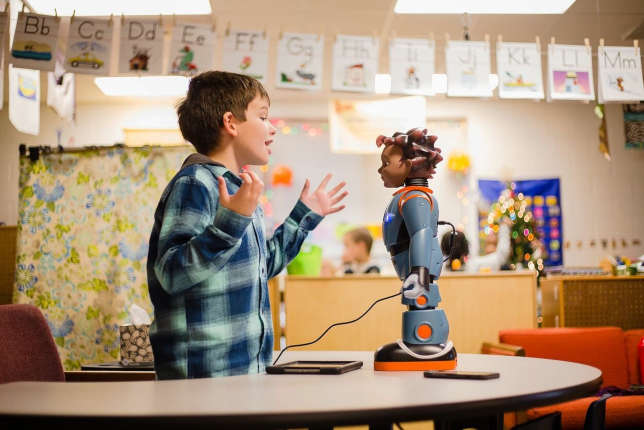
Missouri district has gone public with its use of a robot
specifically designed to work with autistic students. Moberly
School District
in Missouri has adopted Milo
from RoboKind
for use in K-2 classes.
According
to the company, Milo is a "socially advanced" robot who
"never gets tired, never gets frustrated, and is always
consistent." The district has spent about $10,000 on the robot
along with related curriculum and professional development for its
special education teachers.
The
idea behind RoboKind's Robots4Autism program is to help students with
autism spectrum disorder learn how to tune into emotions, practice
empathy and act more appropriately in social situations. Milo, who
has the ability to show various expressions, delivers his lessons
verbally. As he speaks, a chest screen shows various symbols to help
the student understand what is being said. Milo also directs the
kids, who are sitting with their special education instructor, to
watch brief video clips on their tablets, which demonstrate the
skills they're working on. The learners are asked by Milo to say
whether the person in the video is doing the action correctly.
Reporting
in
the Moberly Monitor-Index
quoted district Director of Special Services, Erin Oligschlaeger,
calling Milo "the future of education and socialization for
learners with autism."
Already,
the story stated, the teachers have seen how Milo has helped their
students with their social interactions. "He is engaging and the
students are excited to work with him," said special education
teacher Megyn Martin.
About the Author
Dian Schaffhauser is a former senior contributing editor for 1105 Media's education publications THE Journal, Campus Technology and Spaces4Learning.