AR/VR Classroom Kits Coming to K–12
- By Dian Schaffhauser
- 06/12/19
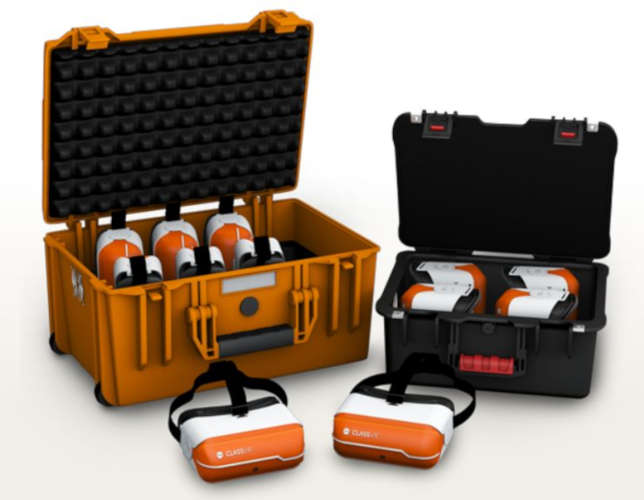
Two education companies are teaming up to deliver virtual reality and augmented reality kits to K-12. The arrangement between CDI Technologies and ClassVR will result in classroom-ready VR and AR kits that include a toolset for helping teachers add immersive learning experiences to their lessons. CDI specializes in selling to and supporting technology in schools; ClassVR produces a VR headset and VR learning curriculum.
The kits, which are available in sets of four or eight headsets, include:
-
Standalone VR headsets that eliminate the need for additional mobile devices or Bluetooth controllers. The software powering the headsets have a hand and head-based gesture control system to help students navigate and select activities.
-
Learning standards-aligned lessons in literacy, STEM, art, social studies and other subjects. Users can also upload and share their own content.
-
A web-based portal where teachers can control and manage the headsets, plan lessons and monitor student progress. Teachers can set "points of interest" on students' headsets to direct them to certain parts of the lesson and can view thumbnail images of what each student is seeing.
-
Online professional development tutorials and training videos.
-
A portable storage case and 100 GB of cloud storage.
“Virtual and augmented reality help teachers engage students in content to help them retain knowledge, but sometimes the technology can be daunting," said ClassVR CEO, Erez Pikar, in a statement. "ClassVR addresses this challenge by providing teachers with easy-to-use, affordable AR/VR kits that come with everything needed to get started. This technology fits in with our goal of connecting educators with classroom-ready technology that inspires and engages students"
CDI also sells VR kits with Magellan and Lenovo gear.
About the Author
Dian Schaffhauser is a former senior contributing editor for 1105 Media's education publications THE Journal, Campus Technology and Spaces4Learning.