Marty the Robot Gets Makeover
- By Dian Schaffhauser
- 10/22/19
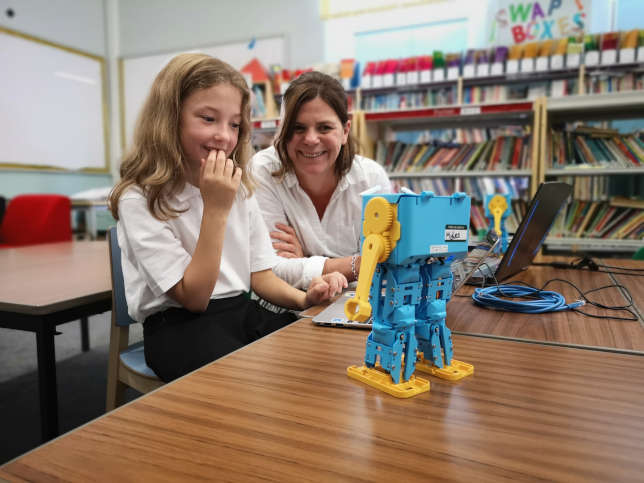
Robotical, an Edinburgh, UK robotics company that introduced "Marty" in 2016 as a STEM learning tool, has announced a second-generation version that comes with new resources for the classrooms. "Marty 2.0," like the original one, is described as a walking robot that can be built and programmed by students. The new version is scheduled to ship in early 2020.
Marty includes WiFi connectivity, nine controllable motors and several sensors. Students can program the robot with Scratch, Python, JavaScript and ROS (an open source operating system for robots). The new edition will offer:
-
Sound and speech capabilities;
-
Improved sensors for proximity detection;
-
"Smart servos" that allow Marty to be "poseable," enabling users to teach Marty movements by moving him around;
-
A modular expansion interface;
-
A learning platform
Marty 1.0 was WiFi-compliant; Marty 2 will include WiFi as well as Bluetooth and USB compatibility. While the current version was charged with a nine-volt cable, the new one can be charged with USB C fast-charging.
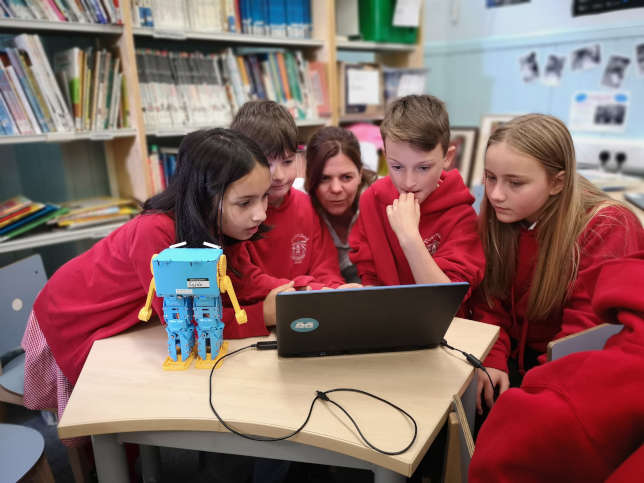
While the original Marty was expected to take three to four hours to build and was recommended for students 14 and older, the newer edition will take about an hour to put together and is suggested for students 10 and older. (With simplified build variants, it's also suitable for those 7 and older, according to the company.)
Teachers will gain access to lesson plans, teacher training and extra support, all workable with laptop, tablet and iPad.
About the Author
Dian Schaffhauser is a former senior contributing editor for 1105 Media's education publications THE Journal, Campus Technology and Spaces4Learning.