Free 3D Design and Print Lessons Cater to Grades 7–12
- By Dian Schaffhauser
- 12/04/19
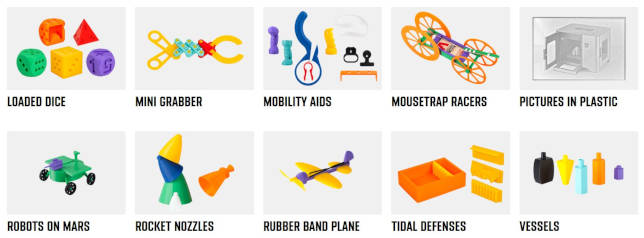
A Czech company with a 3D printer has launched an "academy" to provide educators with free 3D lessons that can be integrated into their classes. Y Soft Corp., which produces the BE3D EDEE 3D printer for schools, offers a set of printing lesson plans through BE3D Academy.
The lessons include activities deemed appropriate for grades 7 through 12 and cover "tidal defenses," creation of "vessels," "mousetrap racers" and "mobility aids," among others. Anybody can access the catalog of lessons and videos about what's covered. But teachers who register on the site also gain access to PDF files with lesson plans, presentations, print instructions, walkthroughs and worksheets. The downloads also come with the 3D models in the STL format. (What isn't available is a breakdown on lesson alignment with U.S. learning standards; the ones currently available address United Kingdom national curriculum standards.)
The use of "ready to teach" lesson plans has streamlined the implementation of learning goals "and has been vital in our STEM programming and implementation," said Joseph Martindale, a teacher at Sydney-based Hills Sports High School, in a statement. "Students have loved seeing their designs come to life and enjoy exploring the opportunities 3D printing provided in both the working world and the classroom."
"3D printing is particularly valuable in the classroom to convey complex subjects. When students can touch and adjust physical objects they have created, understanding increases," noted Y Soft Chief Marketing Officer, Elke Heiss."Comprehension of STEAM subjects can be difficult, and be3D Academy's lessons make concepts interesting and fun."
About the Author
Dian Schaffhauser is a former senior contributing editor for 1105 Media's education publications THE Journal, Campus Technology and Spaces4Learning.