School Districts Pump Out Medical Gear with 3D Printers
- By Dian Schaffhauser
- 03/30/20
Calling all 3D printers!
That's the word all over the country as makerspaces run by school
districts have begun churning out essential medical gear for area
healthcare workers.
Earlier
this week the state of Tennessee announced that public colleges and
universities would use their 3D printers to produce face shields for
healthcare workers to supplement the protection provided by surgical
masks. After three days of around-the-clock effort, 1,500 face
shields had been produced. And more are coming.
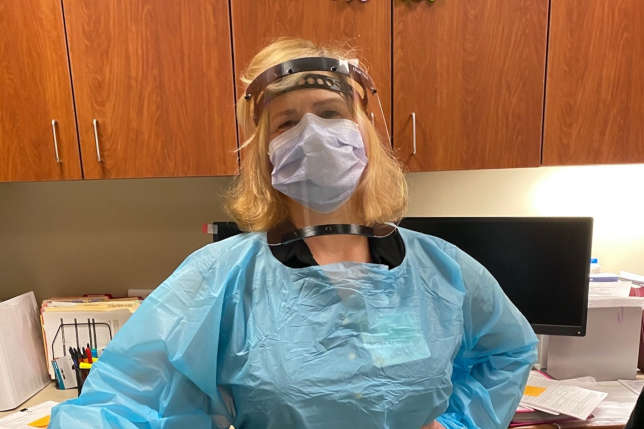
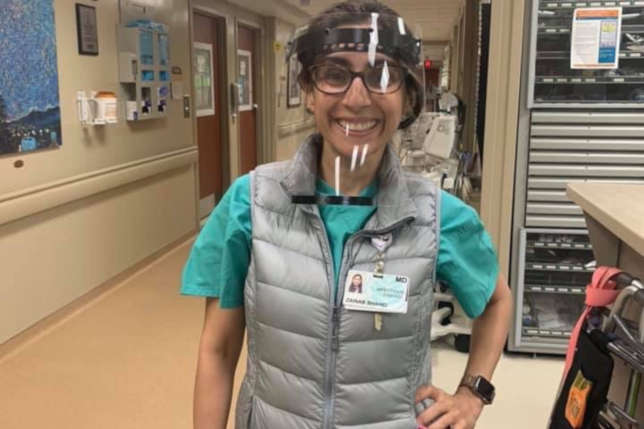
Healthcareworkers wearing 3D-printed face shields. Source:
S. Jean Chai
Contributing
to that effort were the 3D printers from Hamilton
County Schools.
Although the schools have been closed in response to coronavirus,
according to local
reporting,
volunteers gathered almost a hundred 3D printers from the district
and took over operations at STEM
School Chattanooga,
a science-focused high school located on Chattanooga State Community
College's campus.
The
face shields have three parts: a 3D-printed shield frame, an acetate
face shield and an elastic band. Each unit is being distributed with
20 shield frames, to allow medical workers to replace their shields
after each patient. The shields take about four hours to print, and
then they're assembled. They cost less than a dollar to produce, and
local donors have lined up to fund the materials needed.
Now
Tennessee is trying to figure out how to produce N95 respirators.
That challenge has been more problematic because project leaders
haven't found a viable filter material safe enough for medical work.
Several prototypes have been created and tested by hospital
executives in the area, but none has worked yet.
Similar
3D printing efforts are going on with volunteers at the Rolla
Public School System
in Missouri, Cohasset
Public Schools
in Massachusetts and California's Ventura
Unified School District,
many of which have put a call out to their communities to get their
hands on additional printers.
Volunteers
at Charlotte
Latin School
in North Carolina, which has moved to remote learning, is running a
GoFund
Me campaign
to cover the costs of printing face shields for its area nurses and
doctors. As of today, the school has raised $69,622 of the $75,000
goal. That much money would be enough to create 10,000 face shields,
the campaign reported.
The
initiative was organized by local doctors with children attending the
school and helped by a volunteer team of maker, engineering and
project management experts.
Both
the school and the University of North Carolina at Charlotte are
already running their 3D printers 24 hours a day, to produce the face
shield components. The money is intended to be used for purchase of
"PLA and PTEG filaments, elastic and sanitizing supplies,"
the campaign noted. "Once the components have been printed and
checked for quality control, our team of volunteers will assemble the
face shields by hand, sanitize the finished product, and prep them
for delivery."
Many
of the shields have already been donated to area healthcare workers.
One doctor who leads an emergency room team expressed her thanks on
the campaign webpage. "I am rationing [the face shields] between
4 hospital ERs now," wrote Gloria Tsan an MD with the
Mid-Atlantic Emergency Medical Associates. "I am giving [them]
to ER doctors first because we are the ones doing intubations with
highest risk and we just don't know which respiratory failures have
COVID, so we are treating all these patients as such... When I showed
up to my shift with those 10 shields, the look of relief on the ER
docs' faces were wonderful. They also felt much more comfortable
intubating with the shields. Right now, we are bleaching down and
sharing the little that we have and keeping it with our Emergency
Airway Kits and it is still making a huge difference. My ultimate
goal is for every ER doctor, ER [advanced practice provider], ER
nurse and ER radiology and EKG tech to have their own shield that
they can clean, keep and feel safe and protected, so we focus on the
task at hand, and not worry about protection."
About the Author
Dian Schaffhauser is a former senior contributing editor for 1105 Media's education publications THE Journal, Campus Technology and Spaces4Learning.