SparkFun Opens micro:bit Technology to American Markets
SparkFun Electronics has begun carrying the micro:bit in the United States, starting this month and shipping in early May 2017. The micro:bit — a beginner-friendly, reprogrammable microcontroller — gained popularity after the BBC gave the board to every 11- and 12-year-old student in the United Kingdom to inspire a new generation to pursue innovation in computer science.
The micro:bit, as an open development board, works in sync with other hardware components and soft materials to create projects that can ignite creativity using technology as an artistic medium, according to a news release. The micro:bit’s 25 LED array, Bluetooth and USB connectivity, embedded compass and accelerometer, as well as mobile and web-based programming capabilities, make the board an effective tool for teaching and engaging in computational thinking and basic electronics in an inspiring and interactive way, the release said.
The unit is the size of a credit card, has 16 K RAM and 256 KB program memory, runs on 16 megahertz and costs $14 each ($16.50 pre-order), a SparkFun spokeswoman said.
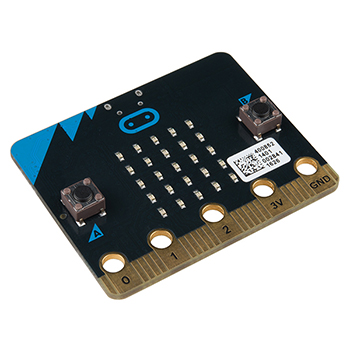
As a Google Chromebook-compatible board, the micro:bit can be integrated into a classroom’s existing technological framework. The micro:bit can be programmed using a number of platforms such as MakeCode, an online environment where the user can choose either block or text-based (JavaScript) programming; MicroPython; as well as many others that give users the opportunity to learn a variety of programming languages and their connection to hardware. The board is also compatible with Android and iOS code editors for mobile programming.
“We’re always looking for opportunities to support teachers’ efforts in finding new ways for students to explore programming and hardware,” said SparkFun CEO Glenn Samala in a statement. “Given the micro:bit’s wild success as a teaching tool overseas, we look forward to sharing it with our friends in education here in the United States.”
SparkFun is launching a contest Wednesday, giving away 30 micro:bits to teachers so they can start sourcing their ideas on all the ways a micro:bit can be used.
For more information on the micro:bit , to pre-order or to enter the contest, visit sparkfuneducation.com.
About the Author
Richard Chang is associate editor of THE Journal. He can be reached at [email protected].