
Schools today generate enormous amounts of data. The difference between collecting it and using it effectively often comes down to quality, access, and context.
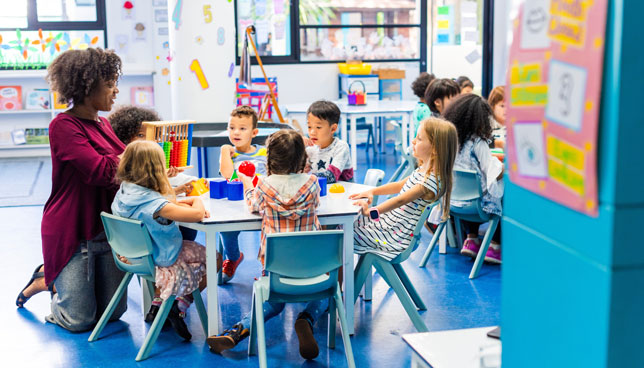
Our nation's largest early childhood program has not fully caught up with what science now tells us about how children learn.

As education leaders start to craft an AI policy that is both practical and flexible enough to evolve with this fast-changing technology, there is at least one principle that should be foundational: AI should serve to augment human critical thinking and creativity but never replace human interaction and decision-making.

OpenAI has announced what it says is an AI-generated solution to the Navier-Stokes existence and smoothness problem, one of mathematics' seven Millennium Prize Problems, while Anthropic has reported separate advances in research mathematics and formal proof generation.