Classroom Management Program Adds Teacher-Controlled Browsing
- By Dian Schaffhauser
- 03/20/17
An education technology company has added additional teacher controls to its classroom management program. Sergeant Laboratories, which specializes in creating security and compliance programs, has enhanced its school product, AristotleInsight::K12, with "teacher controlled browsing."
The program's basic functionality is to perform acceptable usage and asset tracking. AristotleInsight::K12 gives teachers visibility to their students' computing device usage, includes a CIPA filter and missing device location functionality. The software-as-a-service runs on multiple platforms: Chromebooks, PCs, Macs and printers.
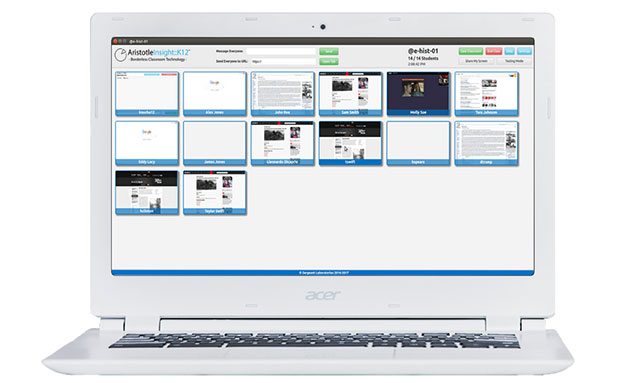
The latest edition of the software allows teachers to specify what sites students can visit during the period or create a custom "blacklist" of banned sites for a given class period. They can create a "penalty box" to limit the sites that problematic students are able to navigate to. They can lock down browsers for testing. And they can give students access to sites that are usually blocked by the school filter.
"For years, teachers have been asking for the ability to manage the technology in their classrooms on the fly," explained CEO Eric Anderholm in a press release. "While other classroom management solutions rely on technology admins to create, maintain and update the list of sites students are and are not allowed to visit, AristotleInsight::K12 takes a teacher-focused approach. We wanted to present teachers with the ability to lock down browsers for testing, reengage off-task students and ensure that students are using technology for learning instead of distractions."
About the Author
Dian Schaffhauser is a former senior contributing editor for 1105 Media's education publications THE Journal, Campus Technology and Spaces4Learning.