NSTA Releases STEM Curriculum Series Focused on Innovation

The National Science Teachers Association’s NSTA Press has released the first five books of its new STEM Road Map Curriculum Series for K–12

A professional education organization, NSTA has approximately 55,000 members that include science teachers, administrators, researchers, business representatives and others involved in science education. NSTA Press offers a library of activities and resources for the classroom and publishes 25 to 30 new digital and print books each year for pre-K through college science curricula.
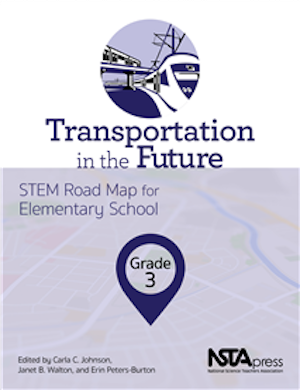
Image: NSTA.

The books are aligned to Next Generation Science Standards, as well as Common Core State Standards and the Framework for 21st Century Learning, according to a news release. They follow the theme of innovation and progress, challenging students to solve real-world challenges across STEM fields. 

For instance, “Transportation in the Future, Grade 3: STEM Road Map for Elementary School” asks students to apply their knowledge of magnetic interactions and mathematics to design a train prototype capable of carrying passengers to their destination.  

Each STEM Road Map Curriculum Series book is priced at $22.95 (or $18.36 for NSTA members) and can be found in the NSTA Science Store.

Featured

  • group of smiling teachers

    NAAIC Expands AI Workforce Development Efforts to High Schools

    The National Applied AI Consortium, a National Science Foundation-funded initiative led by Miami Dade College, Houston City College, and Maricopa Community Colleges focused on artificial intelligence education and workforce development, is expanding its mission into high schools.

  • artificial intelligence on laptop

    OpenAI Plans to Combine AI Products into Desktop 'Superapp'

    OpenAI is reportedly developing a desktop application that would incorporate several of its emerging AI products into a single platform, according to reports, marking the latest step in the company's effort to transform ChatGPT from a standalone chatbot into a broader productivity and automation environment.

  • abstract glowing cube outlines

    Microsoft Positions Windows as a Platform for AI Agents

    The recent Microsoft Build 2026 developer conference highlighted a significant shift in the company's Windows strategy. Rather than presenting artificial intelligence as a collection of standalone features, Microsoft is increasingly positioning Windows as an operating environment for AI agents.

  • digital file folder with padlock symbol

    FERPA Was Written for File Cabinets, Not Cloud Servers

    Passed in 1974, FERPA was never meant to govern cloud-based platforms, artificial intelligence, or the invisible flow of student data across third-party vendors. Our students deserve better.