LEGO Education SPIKE Prime Brings Coding and Robotics to the Middle School Classroom

 LEGO Education SPIKE Prime, a hands-on classroom robotics and coding system for grades 6–8.

LEGO Education today revealed SPIKE Prime, a hands-on classroom robotics and coding system for grades 6–8.

SPIKE Prime is different from other robotics/coding systems in several ways.

  1. Its lessons are designed to be completed within a 45-minute class period, including build time, coding and execution.

  2. It offers a “Buddy Build” system designed to force students to collaborate, rather than creating a situation where one student does all the work with the others sit around and watch. Buddy Build divides up a project so that each team member has specific responsibilities.

  3. It includes an “integrator brick,” which “allows for building together with both the LEGO Technic and the LEGO system platforms, further expanding systematic creativity and the building possibilities,” according to LEGO.
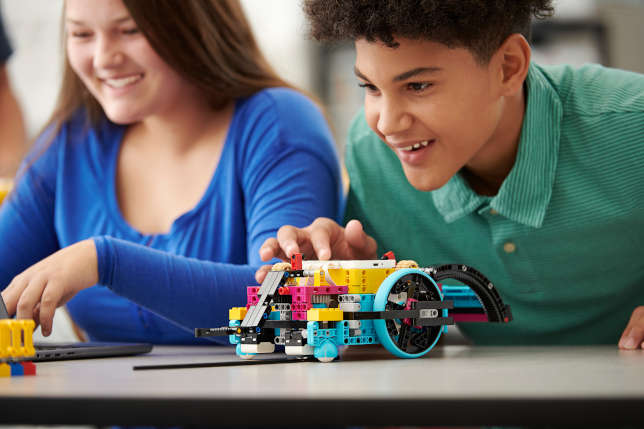
 LEGO Education SPIKE Prime, a hands-on classroom robotics and coding system for grades 6–8. 

SPIKE Prime ships with curriculum, software and hardware components, including:

  • Four complete lesson units;

  • 33 lesson plans, most designed to be completed within 45 minutes;

  • 523 bricks;

  • SPIKE Hub, a box that acts as the brain for SPIKE creations and includes sensors, ports and LEDs; and

  • SPIKE app, whoch is the digital environment for SPIKE Prime. “Available across platforms, the SPIKE App connects the digital world to the physical LEGO bricks and elements,” according to LEGO. “Students will find a coding canvas where they’ll use a Scratch-based language to bring their creations and models to life.”

SPIKE Prime runs $329.95 and is available for preorder now. It’s expected to be available in August. Complete details can be found on LEGO Education’s site.

About the Author

David Nagel is the former editorial director of 1105 Media's Education Group and editor-in-chief of THE Journal, STEAM Universe, and Spaces4Learning. A 30-year publishing veteran, Nagel has led or contributed to dozens of technology, art, marketing, media, and business publications.

He can be reached at [email protected]. You can also connect with him on LinkedIn at https://www.linkedin.com/in/davidrnagel/ .


Featured

  • digital graph

    Building Genuinely Data-Informed School Districts

    Schools today generate enormous amounts of data. The difference between collecting it and using it effectively often comes down to quality, access, and context.

  • Neon blue security locks with a single red highlight

    With AI, Cybersecurity Focus Shifts from Finding Flaws to Fixing Them

    For decades, one of cybersecurity's biggest challenges has been finding vulnerabilities before attackers do. A growing number of security professionals now say artificial intelligence is changing that equation, shifting the focus from discovering flaws to fixing them quickly enough to prevent exploitation.

  • Top View Shot in Elementary School Computer Science Classroom

    Education's Top 5 Technology Priorities and the Challenges Standing in the Way

    Cybersecurity ranks as the No. 1 priority for education technology leaders in the United States, according to the latest State of Ed Tech report from CoSN, yet insufficient cybersecurity staffing and the lack of a dedicated budget are key barriers.

  • Engineering team implements digital guardrails on AI

    3 Starting Points for Integrating AI Guardrails in K-12 Districts

    As education leaders start to craft an AI policy that is both practical and flexible enough to evolve with this fast-changing technology, there is at least one principle that should be foundational: AI should serve to augment human critical thinking and creativity but never replace human interaction and decision-making.