Microsoft Debuts Budget-Friendly Acer and HP Mixed Reality Headsets
Microsoft introduced two mixed reality (MR) branded headsets (in developer editions) this week in the Microsoft Store.
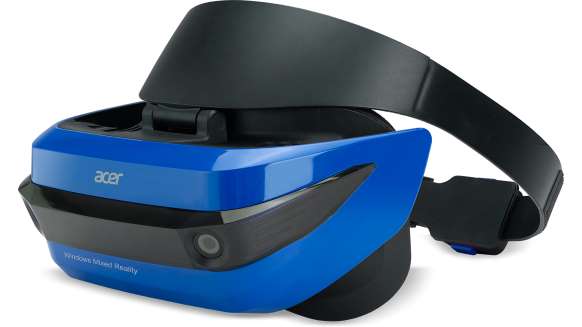
The Acer Windows Mixed Reality Headset Developer Edition. Image: Microsoft.
The company last year revealed its would introduce a slate of Windows-compatible virtual reality headsets from ASUS, Dell and other PC manufacturers that would work without desk- or wall-mounted sensors. The headsets are meant to be affordable alternatives to its more advanced HoloLens.
The new headsets from Acer and HP are technically categorized as “mixed reality” devices — although some early reviews of the tech have expressed they aren’t exactly a perfect overlay of the virtual and physical worlds. As part of the launch, Microsoft Story Labs created an animated video that explains its vision for mixed reality (found below), in which Microsoft calls MR “really the next step in human and computer relation.”
Still, the VR/MR headsets live up to Microsoft’s other promises, like being low-budget and immersive for users. For pre-orders, the Acer headset costs $299 and the HP headset costs $329 (owing to a few extra aesthetic and functional features).
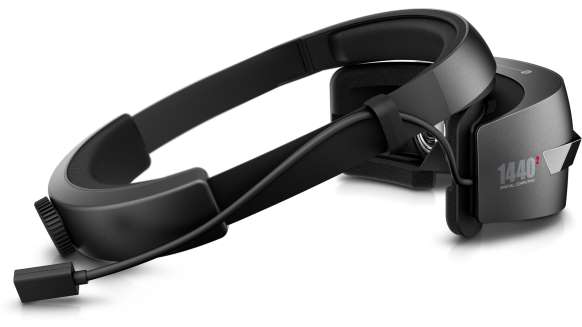
The HP Windows Mixed Reality Headset Developer Edition. Image: Microsoft.
Both headsets come with two high-resolution liquid crystal displays at 1,400 x 1,400 resolution and 95-degree field-of-view. They feature front hinged displays with a 2.89-inch diagonal display size. Both have built-in refresh rates of up to 90 Hz when paired with an HDMI 2.0 port. The two headsets are almost identical in every aspect, except the HP model has a double padded headband, adjustment knob and a 0.60-meter removable cable.
Further information can be found on the Microsoft Store.
About the Author
Sri Ravipati is Web producer for THE Journal and Campus Technology. She can be reached at [email protected].