Epson Launches New Ultra-Short-Throw for Use with Smart Boards
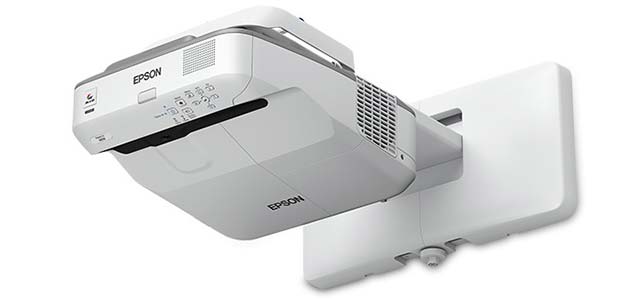
Epson has released a new ultra-short-throw presentation display that is designed to be used with interactive SMART boards in classrooms.
Epson and SMART Technologies have been collaborating to pair Epson's displays with the SMART Board M685 and 885 to bring crisp images to the interactive whiteboards.
The Powerlite 685W Ultra Short-Throw Presentation Display for SMART offers integration with the SMART Extended Control Panel and a 1,280 x 800 image resolution. Users can wirelessly share content between the big screen and individual devices, and up to four students can simultaneously share content from Chrome, Windows, macOS, iOS and Android devices with Epson's iProjection tool.
"The PowerLite 685W for SMART also offers additional networking capabilities that allow schools to manage up to 1,024 Epson networked displays using the EasyMP Monitor software or Crestron RoomView," according to a news release. "Teachers can also connect to an access point on the network to share their display with the entire class, without adding more cables. Additionally, using the Message Broadcasting plug-in for EasyMP Monitor, schools can send updates or announcements remotely to up to 1,024 Epson networked displays."
"Through our longstanding partnership with SMART, Epson is able to provide industry leading display technology for K-12 classrooms," said Veronika Knight, product manager for projectors at Epson, in a prepared statement. "Epson PowerLite 685W for SMART's compatibility with the SMART Board M685 and 885 interactive whiteboards, as well as the presentation display's functionality takes collaboration and classroom learning to the next level."
About the Author
Joshua Bolkan is contributing editor for Campus Technology, THE Journal and STEAM Universe. He can be reached at [email protected].