MakerBot Intros Certification Program for Students, Teachers
- By Dian Schaffhauser
- 04/22/19
3D
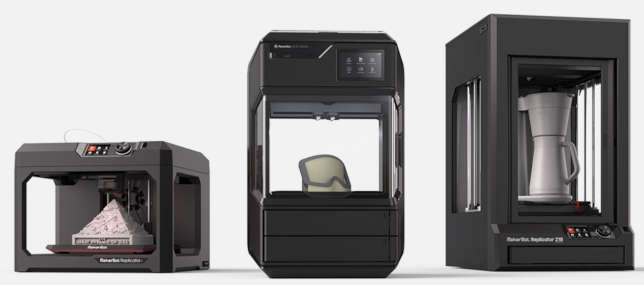
printer company MakerBot has launched a new certification program for teachers and students in middle and high school. Both offerings are available from MakerBot University, the company's online training and certification division.
A $99 online credential for teachers includes two levels. Level 1, MakerBot Operator, covers the basics:
-
The history of 3D printing technology;
-
How to set up the printer and identify its main components;
-
How to do a print job;
-
How to do 3D modeling and use Thingiverse, the company's set of freely downloadable 3D printer plans; and
-
How to perform basic troubleshooting.
Level 2, MakerBot Curriculum Creator, focuses more on the classroom aspects:
-
How to teach 3D printing;
-
How to manage multiple printers and print files;
-
How to troubleshoot problems with student files;
-
How to use the education section of Thingiverse; and
-
How to create a 3D printing project for use by students.
For twice the cost, teachers can also take a blended version of training that includes self-study and in-person activities.
Currently, teachers in the New York City Department of Education are qualified to get continuing education credits for the training. The company said that educators in other locations will have to verify with their own schools or state offices to find out whether the professional development qualifies for credits.
On the student side, the curriculum covers four modules:
-
The use of MakerBot printers and software;
-
The concepts of design thinking and rapid prototyping;
-
How to apply design thinking to product design; and
-
Working with 3D printing.
To receive the certification, users must pass an online exam with or without working through the training exercises. The company said the credentials last for three years. The work requires access to a MakerBot-specific 3D printer.
MakerBot is also making the course materials available for classroom, school and district use. At each level, the program covers certification for a given number of teachers and students. For example, at the classroom level, two teachers and 30 students may become certified. At the district level, the program covers 40 educators and 1,000 students.
About the Author
Dian Schaffhauser is a former senior contributing editor for 1105 Media's education publications THE Journal, Campus Technology and Spaces4Learning.