Vernier Announces Coding Partnerships
The educational software and equipment company is forging new relationships with four companies to beef up its coding offerings.
Vernier announced four new partnerships to give students more opportunities to grow their coding skills. The STEM education company is working with Makeblock, Google Science Journal, Google Workbench and Microsoft to add new solutions and features.
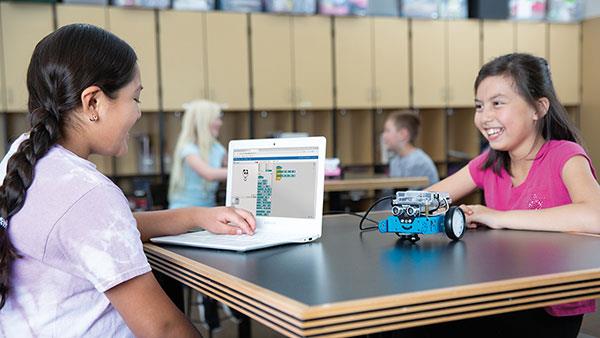
Vernier is collaborating with Makeblock to teach students entry-level coding skills using Makeblock robots and STEM activities from Vernier. The Google Science Journal partnership will allow students to utilize Vernier’s Go Direct sensors to help with research projects.
Vernier’s offerings through Google Workbench will allow students to conduct experiments that explore coding, chemistry, biology, physiology and physics. Students will also get the opportunity to use sensors from Vernier on two Microsoft Hacking STEM labs to collect real-time data.
The announcements were made at the 2019 ISTE conference. More information on Vernier’s coding offerings can be found here.
About the Author
 Sara Friedman is a reporter/producer for Campus Technology, THE Journal and STEAM Universe covering education policy and a wide range of other public-sector IT topics.
Friedman is a graduate of Ithaca College, where she studied journalism, politics and international communications.
Friedman can be contacted at [email protected] or follow her on Twitter @SaraEFriedman.
Click here for previous articles by Friedman.