Xyleme Launches Tool for Developing Interactive Learning iPad Apps
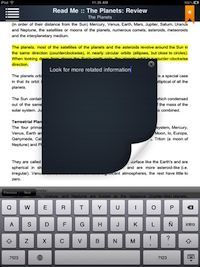
A Xyleme Pastiche app running on iOS. |
Xyleme has introduced Pastiche, a system for delivering interactive learning materials to the iPad. It's powered by the Xyleme LCMS ("learning content management system") hosted service, which enables organizations to create Pastiche applications that learners can download and use on their iPad devices.
Organizations can use Xyleme LCMS to create new learning materials or import existing text and multimedia from Word, PowerPoint, FrameMaker, InDesign, and other development tools and formats. Xyleme LCMS transforms those materials into granular, reusable learning objects that are stored in XML format and can be updated without reimporting. Learning objects can include text, graphics, audio, video, and other e-learning materials. These objects can be reused and recombined using drag-and-drop to create any number of unique outputs in a wide variety of formats, including print, Web, performance support, and Pastiche iPad applications.
Pastiche iPad applications can present materials in four different views:
- The Read Me view is an e-book reader that includes the ability to highlight, bookmark, and annotate materials;
- The Show Me view is a multimedia player for audio, video, and interactive training;
- The Quiz Me view is a self-testing tool for learners that can provide feedback, hints, and advice, and can also submit results to learning management systems; and
- The Help Me view is a support tool to help learners with their questions about using the Pastiche iPad application itself.
These views are customizable and brandable, as well as optional, so if, for example, organizations don't want to include a quiz in their Pastiche application, they can leave out the Quiz Me view, or if they don't want to use the default view names, they can rename them to whatever they want.
Pastiche supports a variety of distribution channels for the iPad applications. Organizations can distribute their Pastiche iPad applications through their current learning management system, eCommerce system, or other content distribution system, or the Xyleme LCMS can automatically submit them to iTunes.
A free demo of a sample Pastiche iPad application is available free from the iTunes App Store.
Xyleme's Get Pastiche package, which includes the full end-to-end solution for creating, customizing, and deploying Pastiche iPad applications is available for a limited time at an all-inclusive fixed price. Further information about Pastiche can be found on Xyleme's site.
About the Author
Leila Meyer is a technology writer based in British Columbia. She can be reached at [email protected].