Grant Spotlight: Up to $100,000 Offered for STEM Projects
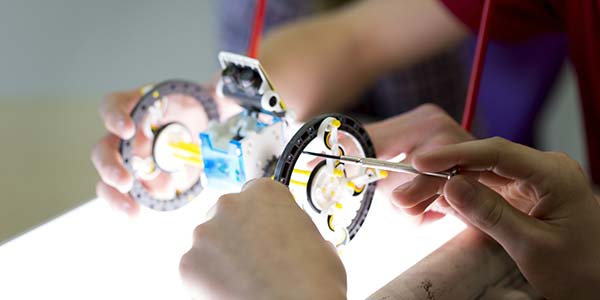
The Siemens Foundation has launched the latest round of its STEM competition, which awards winning students scholarships of up to $100,000.
This year's Siemens Competition in Math, Science and Technology features a new prize structure that will award $100,000 to the national winner, $50,000 for second place and $25,000 for four finalists. Prize amounts at the national level will remain the same whether the winners are individuals or teams. Regional winners will be awarded $3,000 for an individual, or $6,000 to be shared among team members. Finalists for each of the six regions will be awarded $1,000 for each team member.
Research reports in engineering, math and biological or physical sciences are eligible, though topics in behavioral or social sciences are not. Additional information about project eligibility is available at siemenscompetition.discoveryeducation.com/project.
The competition is open to citizens and permanent residents of the United States enrolled in grades 9-12. Individuals submitting projects must be in grade 12. Teams may consist of up to three students from any eligible grade. Teams must be finalized by August 14. Resources are available for students, families, educators and teams in need of a mentor. Research reports and additional required materials must be submitted by September 19.
Last year's competition featured 1,700 submissions and 19 national finalists.
For more information, or to register for the competition, visit siemenscompetition.discoveryeducation.com.
About the Author
Joshua Bolkan is contributing editor for Campus Technology, THE Journal and STEAM Universe. He can be reached at [email protected].