High Schoolers Drive Content Programming in Digital Signage Pilot
- By Dian Schaffhauser
- 04/10/19
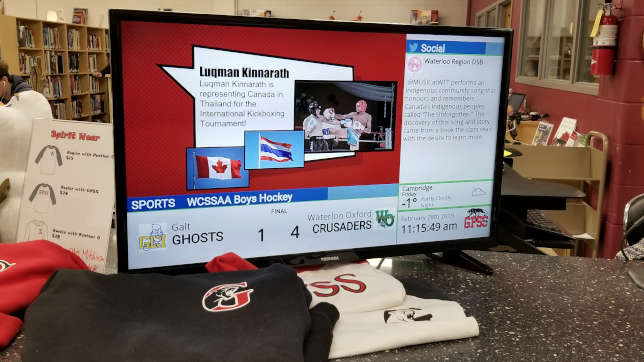
High
schoolers are handling much of the content programming for a new
digital sign deployment in their district. The Waterloo
Region District School Board
in Ontario recently set up digital
display signage
as a pilot project in its 16 high schools to provide updates on
school sports scores, local weather, event calendars and special
announcements, covering both school-specific and district material.
The signage system is also running student-produced content from
YouTube and Google Slides.
Those
students who go through training to learn how to use the system are
also receiving academic credit for their work.
Behind
the scenes, the project is using Chameleon
from Bannister
Lake, which
captures data from numerous incoming sources and allows the student
operators, as well as faculty and staff, to moderate, edit, schedule
and distribute content to various displays.
"The visual nature of the
medium and the immediacy of the messaging is very impactful and
captures the attention of everyone in our buildings," said Jane
Mitchinson-Schwartz, head teacher librarian at Glenview
Park Secondary School,
in a statement. "We are especially impressed with Chameleon's
networking capabilities, which give the entire team the opportunity
to collaborate on content."
Next
up, the district hopes to run student newspaper content and a broader
range of community news.
About the Author
Dian Schaffhauser is a former senior contributing editor for 1105 Media's education publications THE Journal, Campus Technology and Spaces4Learning.