KinderLab Bundles Curriculum for Teaching Screen-Free Robotics Remotely
- By Dian Schaffhauser
- 06/24/20
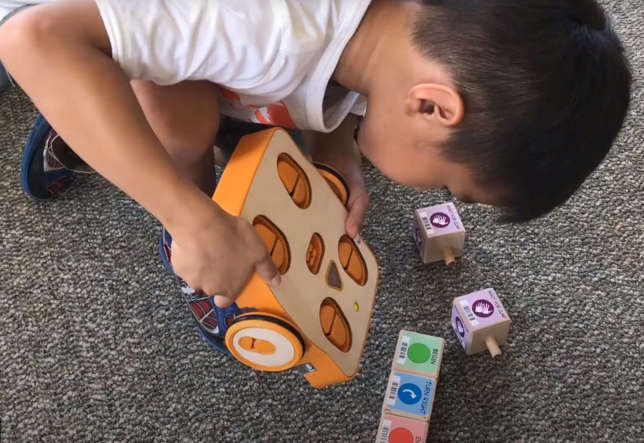
An
education technology company that produces a robot for use by early
learners has developed resources to help teachers prepare for fall
classes that could be held remotely. KinderLab
Robotics
is the maker of KIBO, a robot that can be programmed by young
students without the use of a screen and with the use of wooden
blocks.
KinderLab's
new curriculum bundle is intended to help teachers embed the use of
KIBO into a distance- or blended instructional model to provide STEAM
education at home and school. The bundle includes professional
development content that explains how to teach remotely with KIBO, as
well as how to support parents using KIBO at home.
The
KIBO
Blended Learning Curriculum Bundle
($499) provides the teaching materials needed to support five KIBOs
in rotation among students, but doesn't include the robots
themselves. A five-pack
of robots,
along with programming blocks and other accessories, is $2,900. The
curriculum bundle comes with an hour of live video-conference
training for one participant, with a focus on remote implementation.
"As
we respond to changes to the structure of school, we need to hold
onto what we know works in early childhood education. Hands-on
manipulatives, playful learning, and student collaboration all remain
vitally important," said Jason Innes, the manager of training
and curriculum development at the company, in a press release. "By
providing students with access to KIBO during school closures and
remote learning, schools can teach in a developmentally appropriate
way while promoting connection between students, parents, peers and
schools."
The company has developed a
guide that outlines the benefits of providing access to robotics for
young children and models for how to teach screen-free computer
science and coding despite school closures. That's available with
registration on
the KinderLab website.
About the Author
Dian Schaffhauser is a former senior contributing editor for 1105 Media's education publications THE Journal, Campus Technology and Spaces4Learning.