Weathering the Thunderclouds
- By Charlene O’Hanlon, Dian Schaffhauser
- 01/04/12
| 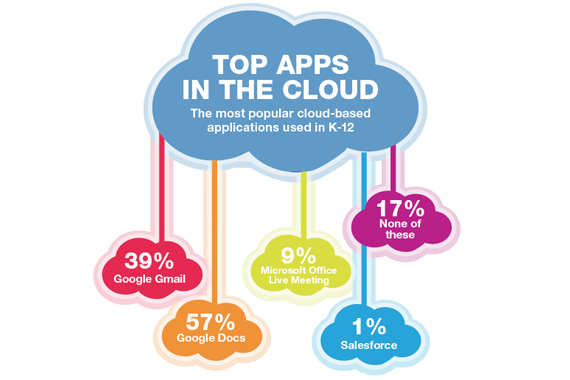
Source: CDW-G 2011 Cloud Computing Tracking Poll
Of course, every great love is bound to have rainy days, and cloud computing is no different.
With a few exceptions, cloud-based application vendors tend to roll out updates to their services on a timeline of their own making. As Sarah Carsello, Minnesota Online High School’s systems engineer, points out, while that philosophy keeps her school on top of the latest releases of its critical software, there’s "an immense learning curve with constantly being on top of the new things that are available and the growing pains of trying to figure out how the changes will impact everybody." That includes, she notes, "being the first one to learn about bugs and issues and technical difficulties."
Also, users need to get used to trusting that their data is safe online. When it comes to backups, "People want to have that document on their own flash drive," explains Neil McCurdy, assistant principal at Coleman Tech Charter High School in San Diego. "They want to be making copies themselves." As he points out, "The data is a lot safer on Google, because it’s distributed and they’ve got people there making sure there are backups being done. They’re putting a lot more attention into making sure the data is safe than I could."
Of course, it doesn’t help that service outages take place even with cloud operations. While years of practice have helped IT people develop processes to follow in the event of down IT systems in the data center, they’re still learning what to do when a major cloud-based service goes down, as Microsoft’s Live@edu recently did.
"All of their data centers went down in North America," Carsello says. "We lost e-mail. We lost all of those services that we’re so reliant on. And we didn’t know how to communicate this to everybody, because the primary way we do that is through e-mail." As a result, she added, her school will need to develop processes to follow when a service goes down in the computing environment.
About the Authors
Charlene O’Hanlon specializes in technology reporting and is based in the New York area.
Dian Schaffhauser is a former senior contributing editor for 1105 Media's education publications THE Journal, Campus Technology and Spaces4Learning.