Web Access Manager Puts Teachers in Control of Filtering
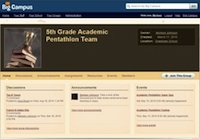
Web Access Manager now lets teachers set policies for content filtering. |
Lightspeed Systems has released an update to its Web filtering system for K-12 schools, one designed to provide enhanced, granular control and allow teachers to adjust settings without requiring intervention from the IT department.
Launched earlier this month, Web Zones is a new feature for the company's Web Access Manager system that lets teachers "create their own rules to define the online content students are allowed to access, instead of having to consult the school or district IT administrator to unblock or block sites," according to Lightspeed. "For example, a teacher may have five Web sites that she'd like her fifth grade students to use for a research project on the science behind special effects in movies, but two of them are blocked by the district's content filter policies. Rather than go to the IT staff for help, the teacher can simply add the two sites to a Web Zone she's created for her class. The modified filtering rules will be applied to the students' browsing sessions once they join the Web Zone."
Web Access Manager is a Web filtering tool specifically designed for K-12 schools that's meant to block access to sites deemed inappropriate for an educational environment while at the same time allowing Web 2.0 and social networking tools to be used. Access is managed though a URL database specific to education, but it can also be customized so that schools can set their own access policies. Web Access Manager also supports mobile filtering and provides a resource library that lets users upload and share multimedia files. It also incorporates a range of collaboration and communication tools, including blogs, discussions, and group management.
Web Access Manager is available now as a standalone filtering tool or as a component of the company's Total Traffic Control network management system. Further information can be found here.
In related news, Lightspeed has also launched a hosted mail service for K-12 schools. Called Campus Mail, the service provides a cloud-based e-mail and file sharing platform with an emphasis on filtering, monitoring, and reporting on users' e-mail and files. It scans for viruses, intercepts messages that contain language administrators want to censor, scans e-mail content, and provides reports to the IT department on "suspicious activity, uploaded files, and suspicious files," according to Lightspeed. "In addition, all messages are archived in compliance with eDiscovery and Federal Rules of Civil Procedure requirements."
Campus Mail is available as a standalone service and as a part of My Big Campus, which is also integrated into Web Access Manager. Further information can be found here.