Startup Receives Federal Grant to Expand Minecraft Student Reach
- By Dian Schaffhauser
- 08/25/16
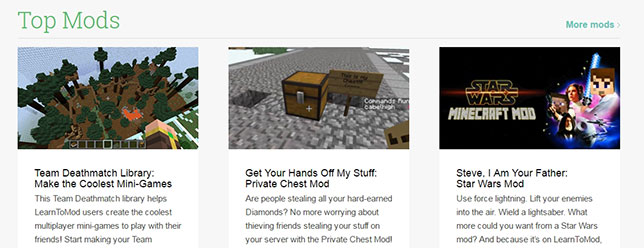
Minecraft just received another education boost. An ed tech startup that encourages students to build their own mods for the popular online virtual world game has received a second grant from the National Science Foundation that will enable it to continue development of its coding environment for novice programmers.
ThoughtSTEM received its initial NSF funding in 2015 to test the use of its Minecraft extension, LearnToMod, for teaching rural middle school students how to program. During that phase, the company said it taught computer science (CS) concepts to "over 50,000 students," who produced 1.5 million Minecraft mods.
A mod is a customization to the block-oriented game that allows the player to add new characters, change the look of objects and modify the environment, among other activities.
ThoughtSTEM was founded by three University of California, San Diego Ph.D. students in 2012 as a tutoring business. The company used the first round of NSF grant money to create a set of tutorial videos that showed users how to develop Minecraft mods in either the visual programming language Blockly or the text-based language JavaScript and to run servers where students could test their mods securely.
The latest funding of $750,000 will allow that project to be expanded to "millions" of other kids in K-12, the company said.
"The potential impact that Minecraft could have on computer science education in this country is huge," said Stephen Foster, CEO of ThoughtSTEM, in a prepared statement. "We have a CS education phenomenon on our hands: Millions of kids who love Minecraft are interested in learning how to mod. With the National Science Foundation's help, we have big plans to make LearnToMod the most cutting-edge platform for CS education."
Pricing for LearnToMod is about $30 per year per student. That gives the user access to 350 Minecraft modding tutorials, online mod editors and private Minecraft servers for testing.
Minecraft and its education version for school use are both owned by Microsoft.
About the Author
Dian Schaffhauser is a former senior contributing editor for 1105 Media's education publications THE Journal, Campus Technology and Spaces4Learning.