Supporting Early Childhood Data Governance Policies
A new resource from the Early Childhood Data Collaborative looks into how state policymakers can support efforts to make more educated investments in early childhood programs through solidifying data governance bodies in each state.
For the 2017-2018 school year, total state funding for preschool programs was more than $8.15 billion and eight states increased the amount of spending on these programs by over $10 million from the prior school year, according to an annual report from the National Institute of Early Education Research.
However, the Early Childhood Data Collaborative (ECDC) argues in a new policy guide that funds directed toward early childhood programs, such as Head Start and preschool, would benefit from a more structured look at data-based outcomes to guide the investment decisions of state policymakers and other stakeholders.
The ECDC brief urges states to create data governance policies to collect information on the effectiveness of early childhood programs. These policies would enable states to collect data on these programs across state agencies to create a full picture of early childhood investments and be able to track outcomes.
Data governance policies would need to develop metrics and data sharing agreements to track progress toward state objectives for early childhood programs by securely integrating disconnected data and authorizing the use of integrated data for research and planning purposes.
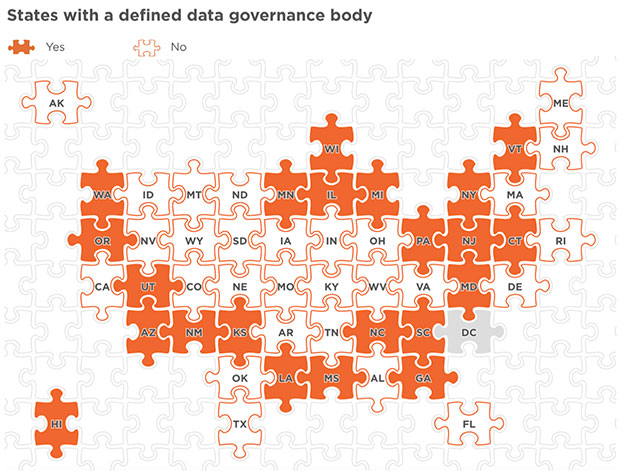
Privacy policies should also be developed guide data collection around parental consent, disclosure of data to external parties and the appropriate uses of data among childhood agencies and departments. The policy guide shares information on governance policies in Pennsylvania, Minnesota and Wisconsin as models for other states to follow.
When states start working on a data governance policy, the ECDC recommends that policymakers first identify critical questions that integrated data can help answer to inform future policy and program questions.
The policy brief urges state governance bodies to include:
- Cross-agency representation from programs serving young children and their families
- Authority to develop inter- and cross-agency data sharing agreements to align data standards and processes that support integration
- Oversight of data privacy policies and use of integrated early childhood data
- Decision-making power to identify priorities for data collection, uses of integrated data and reporting requirements to inform policies
- Responsibility to secure funding to implement data integration goals
- Transparent and clear information for families about how their data will be used and protected
More information on the current efforts of states to create data governance policies can be found here.
About the Author
 Sara Friedman is a reporter/producer for Campus Technology, THE Journal and STEAM Universe covering education policy and a wide range of other public-sector IT topics.
Friedman is a graduate of Ithaca College, where she studied journalism, politics and international communications.
Friedman can be contacted at [email protected] or follow her on Twitter @SaraEFriedman.
Click here for previous articles by Friedman.