New Program and Haul Game Turn the Story of Copper Mining Into Interactive STEM Learning
- By Kate Lucariello
- 09/22/22
Discovery Education today launched a new, browser-based STEM education program free to use that explores the use of mined materials in everyday life and explains the science and technology used in the mining industry, thanks to a partnership with international mining company Freeport-McMoRan.
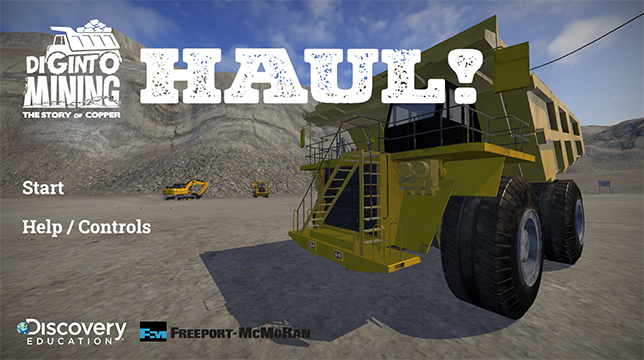
The “Dig Into Mining – The Story of Copper” immersive program for grades 6–12 explores how metals such as copper are extracted and turned into materials such as doorknobs and earbuds. Included is a new educational game called Haul! based on the Dig Into Mining educational resources.
In the Haul game, students virtually operate a loaded truck through a copper ore mine, with a score card that measures their progress; it works on web browsers and Chromebooks, with a keyboard and mouse or USB game controller. Teachers can use the Dig Into Mining educator guide to incorporate the virtual experience into their STEM lesson plan and extend the lessons with activities for before, during, and after, according to a news release.
“The gamification of learning engages students in exciting ways, while the accompanying educator resources and activities make it easy for teachers to connect the classroom to the wider world,” said Tracy Bame, director of Corporate Social Responsibility at Freeport-McMoRan.
Discovery Education General Manager of Social Impact Amy Nakamoto noted the program helps students develop “key STEM, sustainability, critical thinking, and problem-solving skills.”
Learn more at DiscoveryEducation.com or check out the mining education resources and Haul game at DigIntoMining.com.
About the Author
Kate Lucariello is a former newspaper editor, EAST Lab high school teacher and college English teacher.