Survey: 90% of Educators See AI as a Beacon for More Accessible Education
- By Kristal Kuykendall
- 11/01/23
Digital curriculum provider Imagine Learning, in a new survey of K–12 educators’ perceptions and uses of generative AI, found that 90% of respondents believe the technology has the potential to make education more accessible for students who need personalized learning methods.
The 2023 Educator AI Report: Perceptions, Practices, and Potential research comprised a digital survey of educators belonging to Imagine Learning's Teachers' Lounge professional community; it was conducted between August 25 and September 8, 2023, and 69% of respondents were teachers, followed by 19% administrators, and 12% support staff, the company said.
Although respondents were overwhelmingly optimistic about the potential for AI to equalize learning opportunities for learners of all kinds, a nearly equal majority reported feeling unprepared to oversee the use of generative AI in their classrooms. Only 15% of respondents said they feel prepared to do so.
Teachers were more likely to consider embracing the technology than were district and school leaders participating in the survey, Imagine Learning said. Just one-third of respodents said they have leadership support to successfully implement generative AI into their teaching.
Other key findings include:
-
44% of respondents who said they’ve used generative AI reported that it “has alleviated the burden of their workload and made their jobs easier”
-
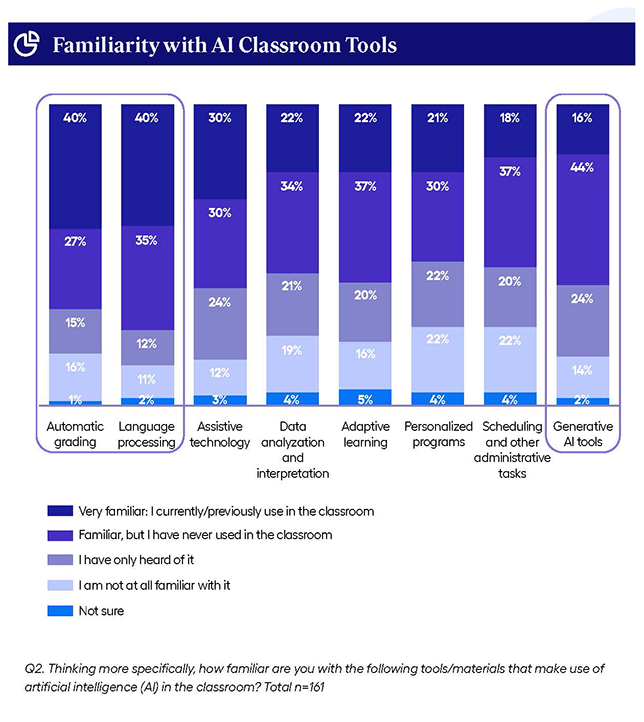
Of the respondents who haven’t yet used AI in the classroom, 65% cited a lack of familiarity as the primary reason; 48% also expressed ethical concerns
-
72% of respondents said their biggest concern about generative AI is the potential for more plagiarism and cheating
-
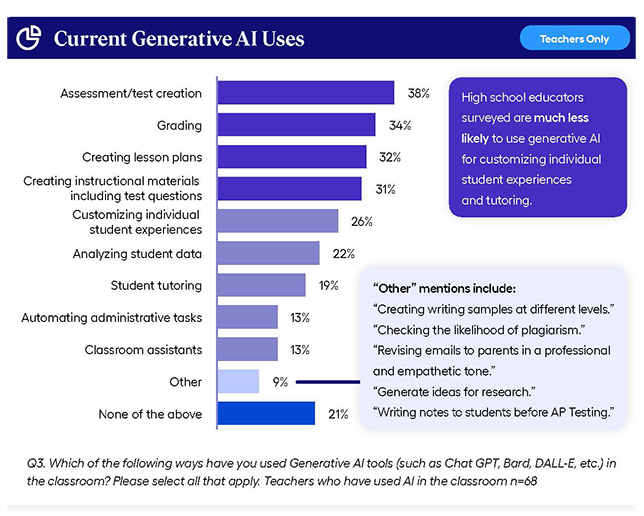
A third of respondents said they are using AI in classrooms to craft assessments, develop lesson plans, create instructional content, and for grading.
-
60% of educators surveyed were concerned that AI will “negatively impact students’ independent thinking, writing, and research skills”
Learn more and download the full report at ImagineLearning.com.
About the Author
Kristal Kuykendall is editor, 1105 Media Education Group. She can
be reached at [email protected].