How One School Supports BYOT With a Parent University
- By Nicole Allbritton
- 04/22/15
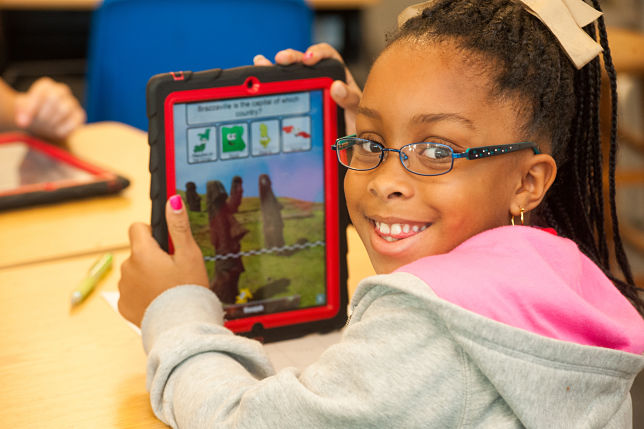
As teachers and students move away from the traditional classroom layout, schools are beginning to incorporate a 21st century learning landscape that looks unfamiliar to those who grew up with chalkboards and desktop computers. This transformation often requires training for teachers, administrators and parents.
Canterbury School, a preK3-12 independent, college preparatory school in Fort Myers, FL, is pursuing a plan that integrates technology into the curriculum in order to inspire inquiry-based learning. In an effort to provide proper training and professional development opportunities to parents and teachers, Canterbury recently launched Parent University, a program dedicated to inspiring parents to become 21st century learning advocates and to providing insight and understanding of the school’s technological changes.
According to Katrina Keene, Canterbury’s director of innovation, “With an increase in technology comes the need to provide professional development for teachers and parents. Just as educators strive to stay ahead of the game with technology, parents are eager for up-to-date information on technology so they can be a part of their child’s education.”
New Spaces for New Technology
Over the years, Canterbury School has undergone many technological changes. Jake Spanberger and his team at Entech, Canterbury’s technology partner since 2010, have worked to implement a strategy that has led to the complete transformation of Canterbury’s technological environment. Innovations have included bringing in iPads and Apple TVs, replacing desktop computers with laptops and installing a campus-wide wireless network.
To keep the physical space up to speed with these technological changes, Canterbury unveiled the Cougar Den, an active learning environment in the Middle School designed for collaboration using smart boards, media centers and mobile workspaces. Awarded grants from both Steelcase and Office Furniture & Design Concepts of Fort Myers, the Cougar Den, which opened in April 2014, removes the rigid classroom atmosphere of rowed seating and instead provides students and teachers with accessible technology and movement that fosters creativity, innovation and academic excellence.
In December 2014, through grants from the Benedict Foundation, Canterbury School’s Parents’ Association, Raymond Building Supply and other donors, the school unveiled the first phase of its new Science Discovery Center. Through the implementation and integration of a pre-K through 12th grade STEM project-based curriculum, the Center includes opportunities for students to explore science, technology, engineering and math in three concept areas: robotics, astronomy and architecture and engineering.
One change that school administrators and faculty are working to implement is a bring-your-own-technology (BYOT) program. The plan to implement this type of program was born from teachers’ and students’ thirst for an increase in technology usage in the classroom. With mobile carts of iPads, Chromebooks and laptops not accessible for every classroom, Keene, Spanberger and school administrators created a BYOT plan of action for the 2015–2016 school year.
Keene said, “The BYOT program benefits Canterbury in a variety of ways, not the least of which is to serve as a reminder that we are dedicated to staying ahead of the curve when seeking to provide access to the latest in technological instruction.“
Canterbury’s BYOT program will apply to students in fifth through 12th grade. Students in fifth through eighth may bring either a laptop, iPad or other tablet; students in grades ninth through 12th grade may only bring a laptop. Keene has also focused on further refining the curriculum to best leverage access to these devices, both inside and outside the classroom.
Sending Parents Back to School
With all of the technological changes occurring at such a rapid speed, Keene identified the need for training among faculty and parents. Launching Parent University early this spring, Keene declared, “It is the missing piece to the transformational puzzle.”
With the change to a BYOT environment, Keene naturally expected that parents would have questions. Can students access inappropriate websites during school? What if my child’s device is stolen or damaged? My child’s book bag is already too full; how do you expect him/her to carry a device, too? All of these questions are reasons why, Keene said, it was necessary to set up hour-long, monthly Parent University sessions in which attendees could feel free to ask about any ed tech topic of interest.
To ensure that Canterbury parents receive in-depth information in a variety of areas, Parent University has addressed topics such as Infrastructure, Current Technology Integrations, Google Apps, Hardware/Software Choices, Current Technological Trends in Schools, History and Supporting Research in Technology Integration, Responsible Use, Internet Safety, Apps in Education and Social Media in Today’s World. Typically, Parent University sessions are held on the same nights as Board of Trustee meetings so that parents who are already planning to attend the board meeting can come early and attend Parent University.
Canterbury School parent Stephanie Allione said, “I myself thought I was a ‘cool’ parent and knew a lot; however, my 11-year-old daughter is passing me. I think it is wonderful that Canterbury has this program because parents need to be educated on things like social media and technologies used in the classroom. Parents also need to be educated on how to engage in conversation with their children in regards to using social media and other technologies.”
Starting next year, the school will offer parents the opportunity to earn digital badges for attending sessions. Keene also plans to involve teachers and students in Parent University, eventually having them lead the sessions.
Canterbury parent Michael Pickett concluded, “This is a wonderful opportunity for parents to network and to become more informed. We are in a new world of communication and it can be used in a positive way. Parent University is a great way to let parents know that this type of information is available if they wish to receive it. In today’s ever-changing world, although you might think you are tech-savvy, tomorrow it’s something new.”