The 'Power' of a Student Information System
##AUTHORSPLIT##<--->
Neither distance nor war was any match for technology in one mother’s effort to help turn around her son’s sliding math performance.
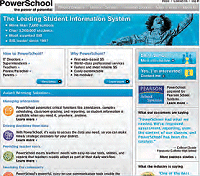 DURING MY SIXTH-GRADE year at Hillside Elementary School in Omaha, NE, I was introduced to a student information system. My teachers explained that the new system, called PowerSchool, would allow us to check our test and quiz scores, daily assignments, and other information such as class schedules over the internet. Then they mentioned that parents would have access to this information. Some of my classmates were surprised and even a little worried about how this “instant mom-and-dad access” would affect dinnertime conversation, but I wasn’t really fazed by it. I thought it would be easier to check my test grades online rather than waiting for class the next day, but overall, I didn’t see this new system as having much of an impact on my daily routine. It turned out I was wrong.
At first, I found myself logging on to the system every other day to check my most recent test scores. But as the school year went on, I found myself logging on every night to check my grades and to make sure I hadn’t missed any homework assignments for that night. The system certainly helped keep me current on my assignments and grades.
Then my mom left for Iraq.
My mother is a staff sergeant in the US Army. When I was in sixth grade, she was deployed to Iraq for 16 months. It was hard not having my mom around every day to look after me and to talk to about life and schoolwork. She’s the one I count on for help when I need it, and she’s also the one to take me to task when I am not doing as well as she knows I could be.
It was during my mom’s time overseas that my teacher, Mr. Folchert, introduced our class to fractions. Now, I have to admit, math wasn’t really my favorite subject—at all. While my mom was away, my test and quiz grades started to slide a lot, and I was having trouble completing my math homework. My mom, who logs on to PowerSchool every day, was able to access the system while she was in Iraq. She noticed that my math grades were dropping and talked to me about it. We discussed ways I could get help, and she stressed the importance of completing homework assignments and helped motivate me to do better. She was so informed about my grades and homework assignments and so involved in helping me overcome the trouble I was having that sometimes I found myself wondering, Mom, are you really in Iraq?
I really began to notice the impact of the student information system when my mom used it to contact Mr. Folchert directly. She e-mailed him to discuss the difficulty I was having in math. Mr. Folchert was able to give my mom more details about the lessons being taught, the types of problems I was having with my homework assignments, and my overall performance in class. My mom was able to work with me and my teacher to develop a plan for helping me improve my grades.
Mr. Folchert worked with me during class to make sure I understood the lessons, and he addressed some of the specific problems I had explained to my mom. By the end of the year, I had turned my math grades around and even started to like solving fractions a little more, since I now had a clearer understanding of the lessons being taught.
I can definitely say that the student information system has had a positive impact on my overall performance in school as well as on my daily routine. The fact that my mom can check my grades and assignments every day pushes me to do better. My mom always says it’s better to face challenges head-on rather than hide from them and allow them time to grow; PowerSchool helps me do exactly that.
Now as a ninth-grader, I continue to use the system every day to stay updated on my grades and homework assignments, and my mom still uses it to stay informed of my progress and connected with my teachers. I think student information systems are a great way to keep students motivated and to allow parents, students, and teachers to work together to develop a plan for improvement…even when your mom happens to be thousands of miles away.
Corey Bazemore is a ninth-grade student at Westside High School in Omaha, NE.