Classes Make Virtual Science Trek to Mt. Kilimanjaro
- By Dian Schaffhauser
- 09/25/12
For the fifth time in as many years a group of scientists, teachers, and students are heading up Mt. Kilimanjaro in Tanzania to research mountain biomes and share what they discover with students online. Virtual aspects of the "GLOBE Xpedition" will include the sharing of data collected on the trip as well as two live webinars hosted from the mountain during times when students elsewhere in the world will be able to tune in.
Run by the Global Learning and Observations to Benefit the Environment (GLOBE) program, the trek exposes young scientists in primary and secondary school to investigations of the environment. GLOBE has trained 58,000 teachers from 24,000 schools around the world in leading students through inquiry-based science projects.
The latest expedition is led by an international team of five scientists from the International Arctic Research Center at the University of Alaska Fairbanks. It also includes a middle school student from Valdez, AK and three high school students from Alaska, Colorado, and Texas, as well as their teachers and other educators; and students from Benin and Tanzania in Africa. The group has 18 trekkers as well as guides, base camp support staff, and a two-person film crew.
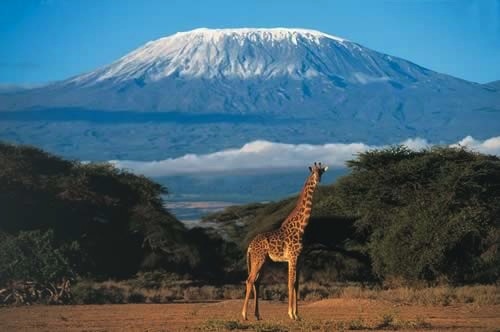
Virtual aspects of the "GLOBE Xpedition" will include the sharing of data collected on the trip as well as two live webinars hosted from the mountain. |
The students and teachers will monitor air temperature, clouds, surface temperature, relative humidity, soil temperature, and several parameters of water on the mountain (pH, electrical conductivity, and dissolved oxygen). According to the organizers, those data will be used to validate permafrost studies being led by lead scientist Kenji Yoshikawa of the University of Alaska Fairbanks.
The same data will be uploaded to a GLOBE database for access by others, including schools participating virtually. The program has put together a mountain overview and activities packet, as well as learning activities and lesson plans. It's also planning to update a blog each day of the trek.
The scientists involved in the expedition will host a live webinar Wednesday, Sept. 26 at 1p.m. Eastern time. They'll broadcast via satellite phone to discuss hydrology, mountain ecology, and the permafrost research.
A second webinar will feature the students and teachers who are on the trek. That session takes place Monday, Oct. 1 at 1 p.m. Eastern. The presenters are expected to give attendees an idea about what it's like to be a student doing real scientific research on a mountain.
Pre-registration is required for both events.
"This is a unique opportunity not only for the students headed to Africa for the climb but also for those in the classroom worldwide, who will be able to follow along online and use the data that students and teachers gather in the field," explained Ron Zwerin, director of communications at GLOBE. "The expedition is an excellent example of how GLOBE connects a community of scientists, teachers and students so that students don't just learn about science; they do science."
About the Author
Dian Schaffhauser is a former senior contributing editor for 1105 Media's education publications THE Journal, Campus Technology and Spaces4Learning.