Aleratec Introduces New Charge and Sync Station Mini 10
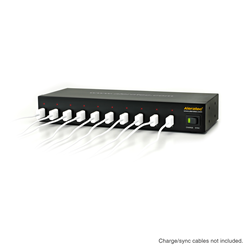 Aleratec, a designer, developer and manufacturer of portable device management products, will introduce the Charge and Sync Station Mini 10 at this year’s International Society for Technology in Education (ISTE) show in Atlanta.
According to the company, the 10-port station is small enough to fit into a laptop bag or desk drawer and supports iOS, Android and most other platforms. It comes in an all-metal enclosure and charges or syncs up to 10 tablets, smartphones, iPods or other USB-charged devices at a time. It offers Smart-Charge support for iOS devices for the fast charging of iPads. The station provides up to 2.1 amps per USB port, and comes equipped with a 150-watt power adapter.
To activate the station, users connect their portable devices with USB cables (not included), plug the station into a power outlet and turn the unit on. LED lights show when each device is charging or syncing. To synchronize multiple devices, users can connect a computer to the external USB port on the back of the station and switch it from charge mode to sync mode.
The Charge and Sync Station Mini 10 is available for shipment with an estimated retail price of $399 from Aleratec's resellers and distribution partners.
About the Author
Christopher Piehler is the former editor-in-chief of THE Journal.