Maryville U To Develop New STEM Curriculum for Grades 4-5
Maryville University in St. Louis has received a grant worth nearly $125,000 to develop a new math curriculum designed for students in grades 4-5 who live in low-income areas.
The Monsanto Fund, the philanthropic arm of Monsanto, has given the university $124,995 for a new program called Children Using Robotics for Engineering, Science, Technology and Math (CREST-M). The curriculum will use Lego WeDo robotics in a hands-on way to demonstrate some of the principles that would encourage interest among students in science, technology, engineering and math (STEM).
"One of the problems with the way math is often taught is that just a workbook is used," said Steven Coxon, an assistant professor of education at the university. "In this case, the students will learn math in a much more engaging and motivating way."
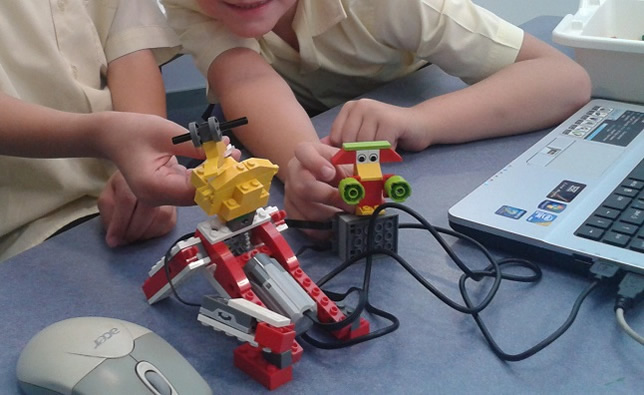
Educators at Maryville will develop the curriculum this spring and test it during a two-week program in July that will involve 80 students and 18 teachers from the Ferguson-Florisssant and Ritenour school districts in suburban St. Louis.
According to Coxon, the goal will be to demonstrate that children who are traditionally underrepresented in STEM fields — minorities who live in low-income areas — can attain the same skills and aptitudes as others when properly engaged in learning.
"We want to create something for high-poverty districts that increases interest in, ability for and knowledge of STEM fields," Coxon said.
Maryville plans to eventually make the curriculum available to teachers and schools throughout the United States, with publication sales funding the cost of professional development for participating teachers.
About the Author
Michael Hart is a Los Angeles-based freelance writer and the former executive editor of THE Journal.