College-Bound High Schoolers Finding Favor with Online Choices
- By Dian Schaffhauser
- 04/30/15
College-bound high school students are showing more interest in the blended model of instruction and less interest in going for the all
face-to-face approach. That finding surfaces in the latest edition of Eduventures'
annual "College-Bound Market Update Report."
Each year the higher education analyst firm surveys high school sophomores, juniors and seniors to gain an understanding about how they
choose a college and what their intentions are. This year the survey questioned more than 20,000 students between December 2014 and January
2015. Of the respondents, nearly seven out of 10 were female; and about a third were first-generation college prospects.
There was a 10 percent drop in students who said they would take all of their courses on campus, whereas blended course options saw the
biggest increase. While 95 percent of students in 2014 said they'd take 100 percent of their courses in person, that count dropped to 85
percent for 2015. Some 30 percent specified that they'd do some portion of course activities on campus and others online.
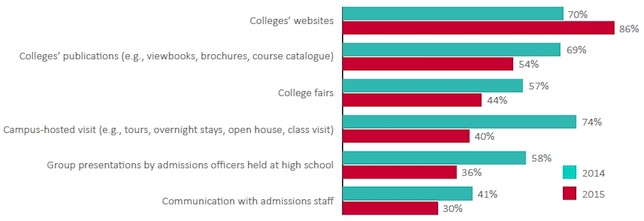
To learn about their college options, high school students are turning to Web sites, which have grown in usage over last year, as well as
social sites, including Facebook, whose usage, the report noted, has grown from 25 percent to 35 percent over the last year for college
search. The report found increases in the use of YouTube and Twitter as well. The use of other popular search tools have remained stable or
declined, according to Eduventures.
Student respondents indicated they care more about outcomes and academics than they do about affordability, contrary to the impression given
by national media, the researchers stated. However, reported Evan Grenier, senior analyst and co-author of the report, the rising cost of
higher ed "has led to prospective students becoming more and more selective about the college or university that they attend."
Eduventures said its annual survey, which provides longitudinal data, offers "unique insight" into the motivations and behaviors behind the
application and selection process. "Our survey data can help institutions differentiate their offerings, attracting more applications that
result in higher yields," added Grenier.
About the Author
Dian Schaffhauser is a former senior contributing editor for 1105 Media's education publications THE Journal, Campus Technology and Spaces4Learning.