PARCC States To Shorten Tests
- By Dian Schaffhauser
- 05/27/15
Adjustments continue on the online assessments designed by the Partnership for
Assessment of Readiness for College and Careers (PARCC). PARCC's governing board recently voted to consolidate the two testing windows
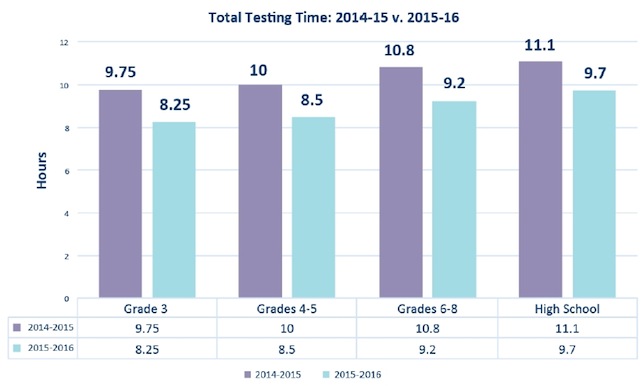
into one and to reduce the total amount of testing time by about 90 minutes.
Those changes
will be in effect for schools starting in the 2015-2016 school year.
PARCC is a consortium of states working together to develop a set of assessments that measure whether students are on track to be
successful in college and their careers. The governing board consists of education commissioners and superintendents from each PARCC state.
The current year is the first one in which its online assessments for English language arts (ELA)/literacy and math have been made available
to states for use in student testing. The vote came in response to feedback from school districts and teachers who had gone through the testing
cycle during this school year. Those tests were taken by 5 million students in 11 states and the District of Columbia.
The testing time for math is being reduced by 60 minutes; the time for ELA will shrink by 30 minutes. The result will create "more
uniformity of test unit times," the board stated. The number of test units taken by students will lessen by two or three units for all
students. For example, the total testing time for grades 4 and 5 will be reduced from 10 hours to 8.5 hours.
Also, the two testing windows, one for math and one for ELA, will be consolidated. That change is expected to simplify administration of the
test for states and schools that had difficulty scheduling two separate testing periods.
The testing window will last for up to 30 days and will extend from about the 75 percent mark to the 90 percent mark of the school year.
Most schools are expected to finish testing in a one- to two-week window during that period.
Each year a small percentage of students from various districts within states will take an additional ELA unit to "field test" items that
could appear in future assessments.
"I am happy to support these changes, which are designed to make PARCC easier for schools to schedule and which will reduce the amount of
time students spend on the assessment," said Massachusetts Commissioner of Elementary and Secondary Education Mitchell Chester, who serves as
chair of the PARCC consortium governing board, in a prepared statement. "We continue to listen to the field as we learn from this initial
PARCC administration."
About the Author
Dian Schaffhauser is a former senior contributing editor for 1105 Media's education publications THE Journal, Campus Technology and Spaces4Learning.