Report: Students Want Hands-On, Real-World STEM Education
The new research also found that teachers are a major influence to students in STEM education.
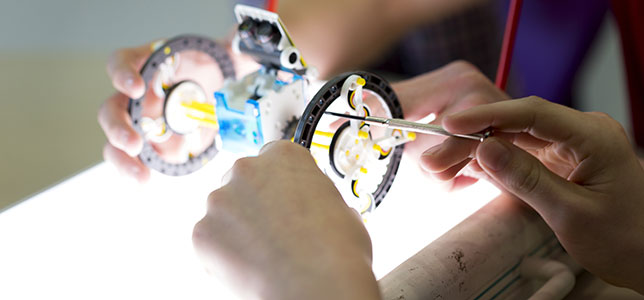
When it comes to STEM education, high school students in the United States want to see changes made to teaching methods and more access to resources outside of the classroom, according to a national survey conducted by the Amgen Foundation and Change the Equation.
The results released in the report “Students on STEM: More Hands-on, Real-World Experiences” show that students want more tangible learning opportunities. Respondents said that common teaching methods, such as teaching from the textbook, are less engaging than hands-on learning methods.
According to the survey:
-
81 percent of students are interested in science, with 73 percent of students surveyed expressing an interest in biology in particular;
-
Students who are interested in biology classes identified teachers (85 percent) and classes (86 percent) as the most influential to their career decisions;
-
Only 32 percent know an adult in a science-based career and 22 percent know someone with a job involving biology; and
-
The survey found that two-way, hands-on learning, such as experiments and field trips, are the most effective ways to engage students in the classroom.
The results of the report are based on 1,569 online surveys completed by high school students currently attending public and private schools in the U.S. The data was weighted by ethnicity and region to mirror the population.
The Amgen Foundation provided an infographic of the survey results. Further information is available on the Amgen Foundation site.
About the Author
Sri Ravipati is Web producer for THE Journal and Campus Technology. She can be reached at [email protected].