Nonprofit Releases Blended and Personalized Learning Strategies
Source: The Learning Accelerator.
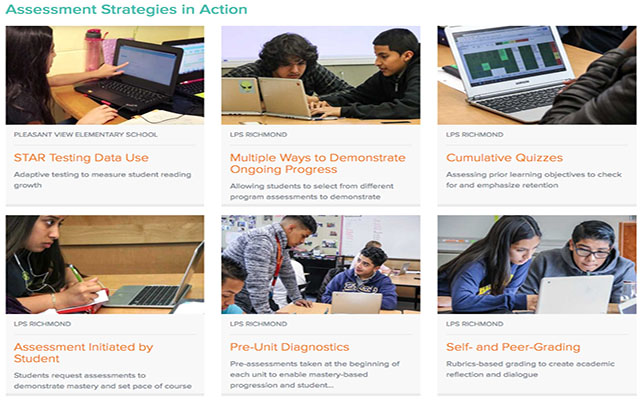
Educators who are implementing blended and personalized learning instruction into their classrooms can utilize new resources from The Learning Accelerator (TLA) to help with the transition. The national nonprofit organization released the Blended and Personalized Learning Practices at Work project, a collection of practical teaching and learning strategies that aim to bring personalized learning into practice.
The project provides strategies for blended learning, including integration, real-time data, personalization and mastery-based progression. In the section on real-time data, for example, users can explore 10 strategies for conducting assessments or five strategies on data analysis. The strategies come from actual blended learning programs at used at various schools and include videos, audio, screencasts and reports.
The collection is “the culmination of more than a year’s work exploring over 100 schools and systems to identify places successfully implementing blended and personalized learning,” according to TLA. The nonprofit worked closely with six schools in particular, whose strategies are featured in the project:
“It was really important for TLA to work with a group of schools that are using blended and personalized learning as a mechanism for closing the achievement gap. All of these schools have that commitment,” said Beth Rabbitt, CEO of TLA, in a statement.
To view the blended and personalized learning strategies, visit the TLA site.
About the Author
Sri Ravipati is Web producer for THE Journal and Campus Technology. She can be reached at [email protected].