XYZprinting Releases STEAM Curriculum and New Printers
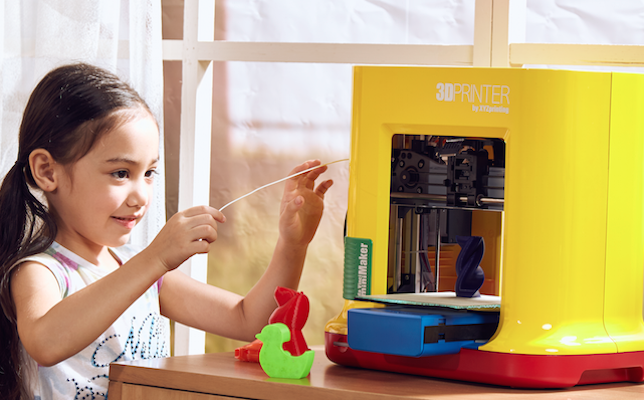
Images courtesy of XYZprinting.
At the ISTE (International Society for Technology in Education) conference this week, XYZprinting demoed a slew of 3D printers and a standalone pen that can be used by individuals with varying 3D printing experience. In addition, the company made its Next Generation Science Standards-aligned, online STEAM curriculum widely available and kicked off a new educator ambassador program.
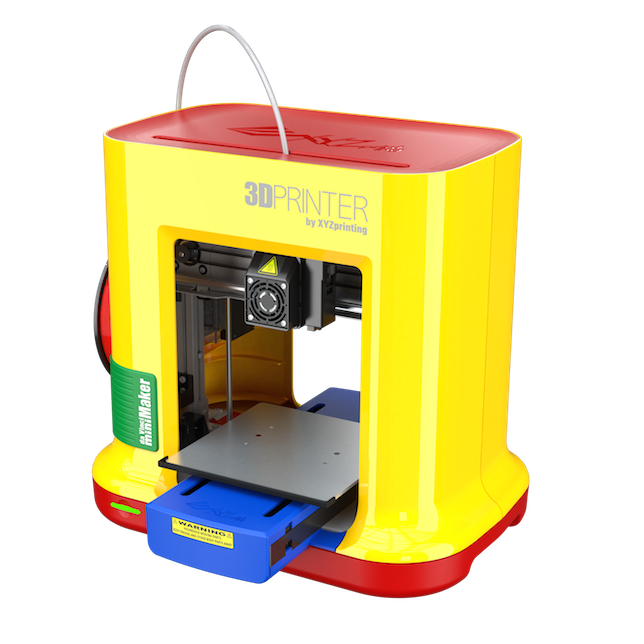
The da Vinci miniMaker.
First, the da Vinci miniMaker is billed as a model for individuals who are totally new to 3D printing, according to a company representative, and works best for K-5 classrooms. Its dimensions (width x depth x height) are 15.35 inches x 13.19 inches x 14.17 inches and it offers a maximum build volume (W x D x H) of 5.9 inches x 5.9 inches x 5.9 inches. The resolution ranges from 100 to 400 microns, depending on the speed. The 3D printer, priced at $249.99, comes with free access to more than 4,500 3D models to choose from in its exhibitions gallery. Students can also make their own with the free XYZmaker design tool for beginners, or import .3W, .STL, .NKG and .3MF file types.
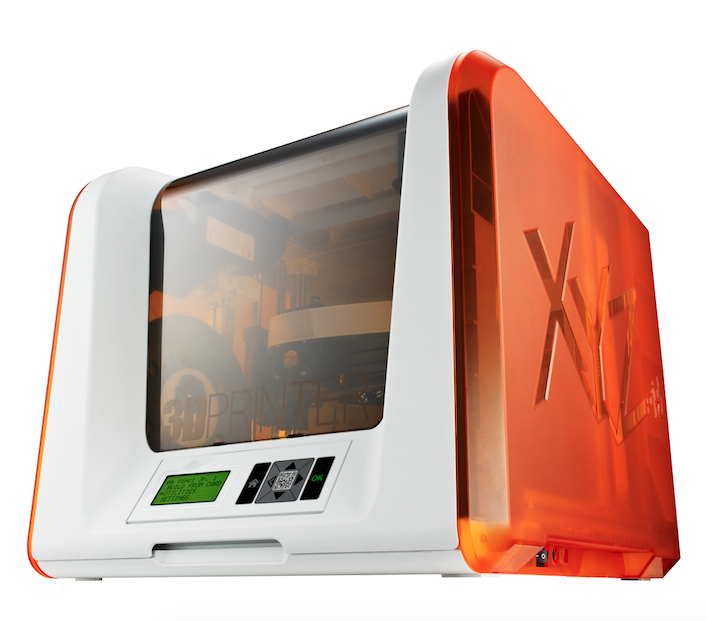
The da Vinci Jr. 1.0.
Next up, the da Vinci Jr. 1.0 is designed for middle school classes (grades 6 to 8) with students who are also new to 3D printing. The Jr. 1.0 (retailed at $349.95) has the same build size and supports the same file types as the miniMaker, but it’s slightly bigger (16.54 inches x 16.93 inches x 14.96 inches) overall. It’s more advanced than the miniMaker in terms of its features, but still relatively easy to use for beginners. For example, the press and release 0.3mm extruder is designed to make extruder replacement and routine maintenance as quick and easy as possible. In addition, the “EZ-offset” calibration function aims to cut down calibration time when maintenance is required.
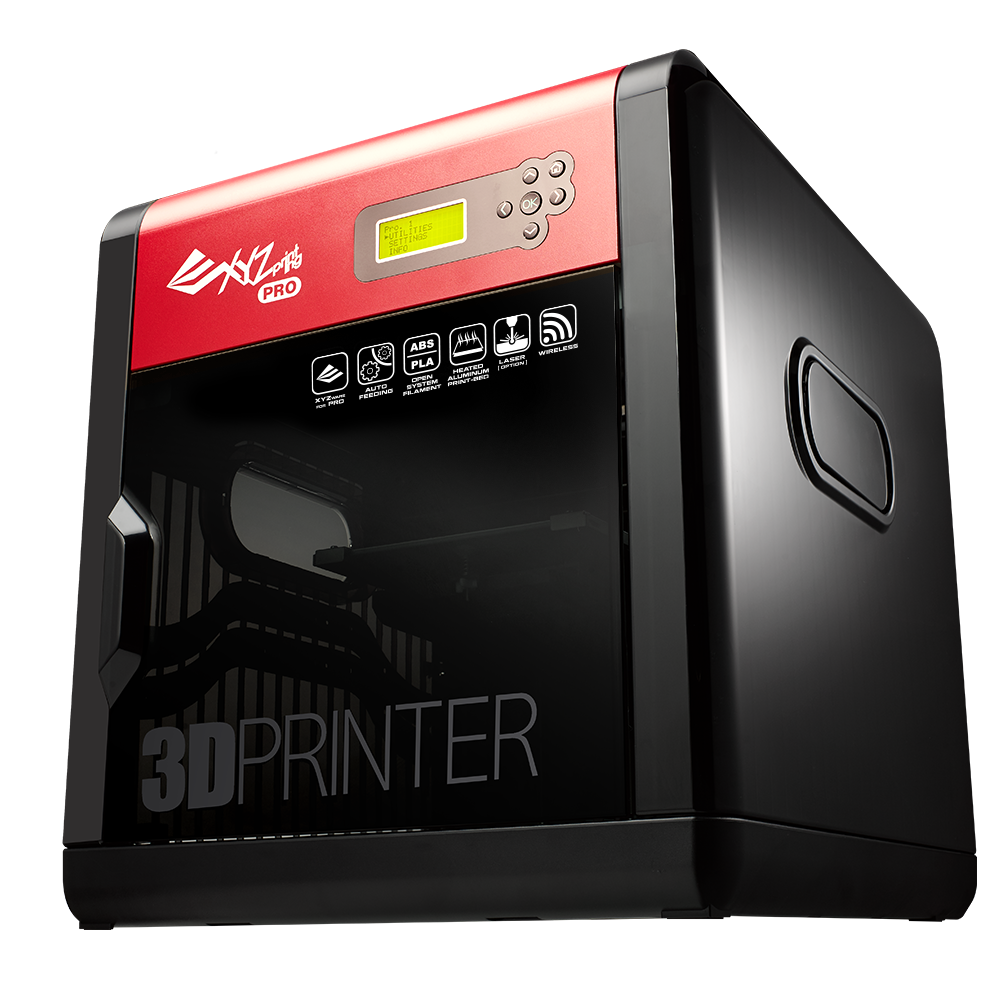
The da Vinci 1.0 Pro.
XYZprinting also exhibited two professional grade 3D printers: the da Vinci 1.0 Pro and Nobel 1.0A. Both are suited for high school students (grades 9 to 12) and beyond. The da Vinci 1.0 Pro is the company’s first open-source filament 3D printer. It comes bundled with the XYZware Pro, or software that enables users to change the 3D printer’s settings for speed, retraction and more, and has an optical laser engraver add-on. The 1.0 Pro’s other key feature is its aluminum print bed, which rapidly and evenly distributes heat to help reduce the chance of warpage while printing. Dimensions are 18.4 inches x 22 inches x 23.3 inches and maximum build volume is 7.8 inches x 7.8 inches x 7.8 inches. It is retailed at $699.95.
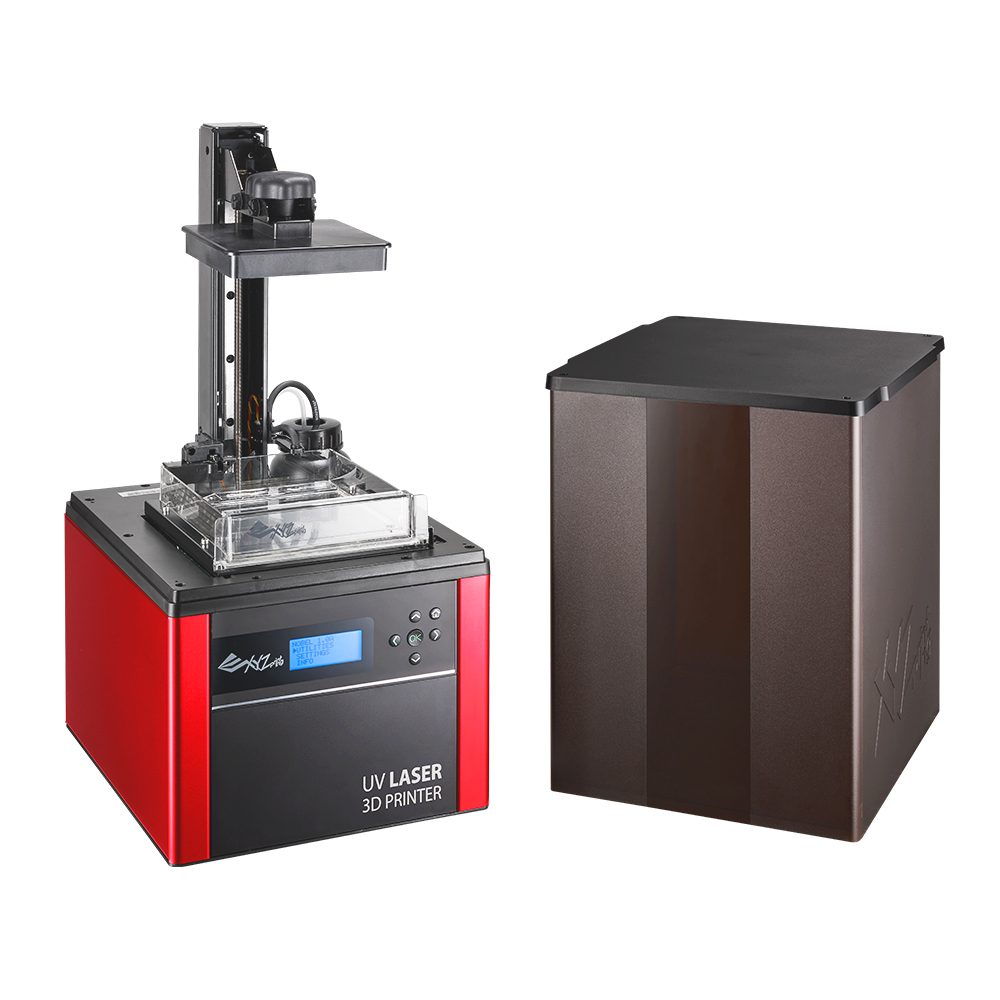
The Nobel 1.0A.
Meanwhile, the Nobel 1.0A is an advanced SL (stereolithography apparatus) 3D printer that comes with a UV curing chamber and costs $1,999.95. It has an enhanced laser scanning unit (LSU) that claims to monitor the 3D printing process. It can, for instance, check if the user has enough filament before every print using its auto-fill-in resin system. The Nobel 1.0A compatible with various photopolymer resin materials, including multi-colored acrylic resins, flexible resins and castable resins. Additionally, the LSU can improve slicing speeds by up to 20 percent — improving the resolution for the X/Y axis to 130 microns and up to 25 micron layer thickness.
Lastly, XYZprinting exhibited the da Vinci 3D pen (suitable for all grades, but especially middle and high school students). It’s a lightweight, standalone device that doesn’t require a computer or software device to start 3D printing — only a power outlet and PLA filament. There’s no restriction on print size and the device can be used to create any three-dimensional object. (A video demo can be found below.)
On top of all of the products, the company opened up its online K–12 STEAM curriculum to U.S. schools for the 2017-2018 school year. It was developed with Next Generation Science Standards (NGSS) in mind and can be integrated into existing curriculum, or work as standalone units. The curriculum places a strong emphasis on teaching 3D design principles, collaborative learning and problem solving skills.
Finally, XYZprinting launched an educator ambassador program, which enables teachers to share their 3D printing expertise and experiences in the classroom. Lance Schreiber, the innovation and engineering teacher at Oasis High School (Cape Coral, FL), expects the curriculum and program “will help our students enormously with grasping difficult visual concepts and will also bolster an interest in their learning,” he said in a prepared statement.
To learn more about the new printers or educator program, visit the XYZprinting site.