U.S. Census Bureau Releases K–12 Lessons on Data
- By Dian Schaffhauser
- 10/10/19
The United States Census Bureau has released free resources for K-12 classrooms. The focus is on encouraging students to make sure their families participate in the upcoming Census, which influences the federal funding given to states and communities for classroom technology, teacher training, special education, after-school programs and school lunch assistance, among other programs. Materials include teacher and student content.
"Statistics in Schools," the K-12 curriculum, features 20 lessons, including these:
-
"Let's Get the Count Right," a 40-minute activity for K-12 that helps student learn how to count up to 100, make number comparisons and understand the concept of populations;
-
"Population Change over Time," a 35-minute unit for grades 3-4 that helps students identify trends in data and make predictions based on data;
-
"Diversity: Languages Spoken in the United States," a 45-minute lesson for grades 5-6 to help students learn how to calculate percentages based on data and understand the concept of "diversity";
-
"Apportionment," a 35-minute study for grades 7-8 on the use of data and how to analyze and interpret it; and
-
"Make Data Speak," a 40-minute unit for grades 9-12 on how to research and interpret data and display it in a "visually creative way."
Nearly every lesson concludes with objectives that help students connect the Census count to distribution of resources within communities and understand why it's important to be counted in 2020.
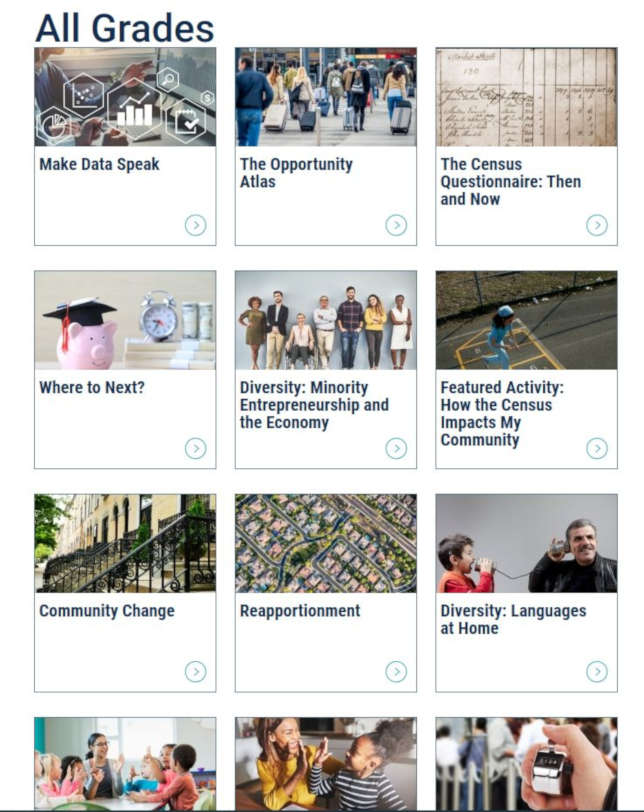
The Census Bureau has also developed activities for pre-K and adult learners.
All of the resources are openly available on the U.S. Census Bureau website.
About the Author
Dian Schaffhauser is a former senior contributing editor for 1105 Media's education publications THE Journal, Campus Technology and Spaces4Learning.